

Quick Answer
This is GreyOrange's story: how the company automated its most time-sensitive operational workflow, Sev-1 incident response, so that bridge calls, real-time transcription, ticket summaries, resolver team engagement, and time-bound escalations all run without anyone manually triggering them. Resolver engagement time dropped from tens of minutes to minutes. MTTR improved. Engineering teams shifted from managing the process to solving the actual problem. Bharat Sharma, Senior Manager of Shared Services and Operations, built it in two layers: integration first, then the agentic solution layer on top.
key Takeaways
This is a customer-attributed story with specific, measurable outcomes. Bharat Sharma, Senior Manager of Shared Services and Operations at GreyOrange, describes the build and its results directly: resolver engagement time from tens of minutes to minutes, improved MTTR, and engineering attention redirected from coordination to problem-solving.
The architecture follows a two-layer sequence. Integration layer first, connecting ticketing systems, customer platforms, and alerting tools. Agentic solution layer second, once the foundation is in place. Attempting the agent layer without the integration foundation in place would have failed.
Start with a high-friction, high-visibility problem. Sev-1 incident management was chosen because the cost of manual coordination was obvious and measurable. Once agentic automation proves itself on something that time-sensitive, organizational buy-in for broader modernization follows.
AI's real enterprise value is orchestration, not insight. The shift at GreyOrange wasn't about generating better reports. It was about connecting systems, triggering workflows, and coordinating across teams without human initiation.
At GreyOrange, what started as an integration problem became an early proving ground for agentic automation in enterprise operations.
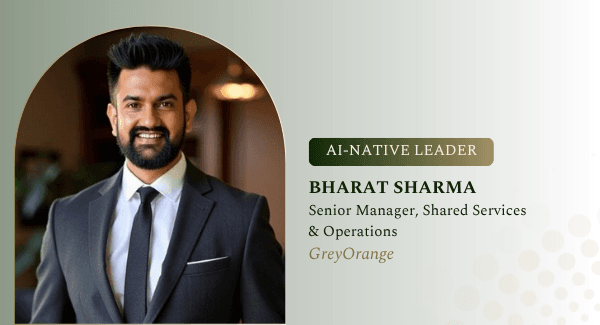
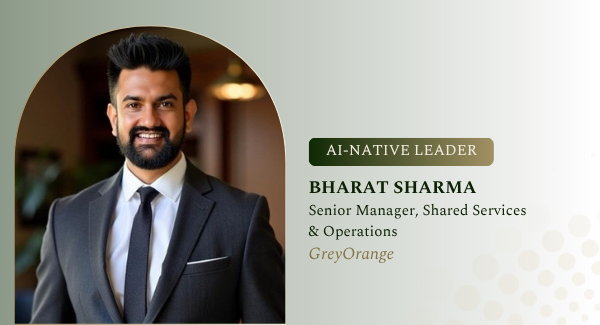
Excerpt from our conversation with Bharat Sharma, Senior Manager, Shared Services & Operations at GreyOrange.
What operational challenges were you trying to solve when you set out to modernize GreyOrange’s enterprise AI foundation?
As GreyOrange scaled its operations globally, we needed a reliable way to integrate our internal ticketing systems with customer platforms and alerting tools. Beyond connectivity, the deeper issue was that our incident management process was slow and heavily dependent on human coordination at every step; including during the highest-pressure situations.
Severity-1 incidents don't wait for people. That lag was an operational risk, and it became impossible to ignore at scale.
How has UnifyApps enabled AI to become operational at GreyOrange?
We're operating in two layers. The first is integration; connecting our ticketing system with customer platforms and alerting tools. The second, more recent layer is our solution builder. We deployed an agentic AI solution that fully automates our incident management workflow. When a Sev-1 fires, a bridge call is created automatically, the call is transcribed in real time, periodic summaries are pushed directly into the ticket, the right resolver teams are engaged intelligently, and time-bound escalations go out without anyone manually triggering them. The entire coordination loop runs autonomously.
What's changed inside GreyOrange since you began building this Enterprise AI foundation?
What used to require manual coordination across multiple teams now happens without anyone orchestrating it. Resolver engagement that once took tens of minutes now happens within minutes, materially tightening our Sev‑1 response loop. Our mean time to resolution has improved, but more importantly, our teams can focus on solving the actual problem rather than managing the process around it. That shift in where human attention goes is the real change.
How has building these enterprise workflows shaped your thinking about where AI creates lasting enterprise value?
Our experience building agentic automation on UnifyApps has shown me that AI's real enterprise value lies in orchestration; not just generating insights, but taking action. As generative AI matures, platforms that can connect systems, trigger workflows, and coordinate across teams will become central to how enterprises operate. We're already seeing this shift in how we handle incidents, and I expect it to expand across more operational domains.
What would you tell other enterprise leaders who are earlier in their AI journey?
Start with a high-friction, high-visibility problem — something where the cost of manual processes is obvious and measurable. Incident management was one of them for us at GreyOrange. Once you demonstrate that agentic automation can handle something as time-sensitive and complex as a Sev-1 incident, organizational buy-in for broader modernization becomes much easier to build.