


Overview
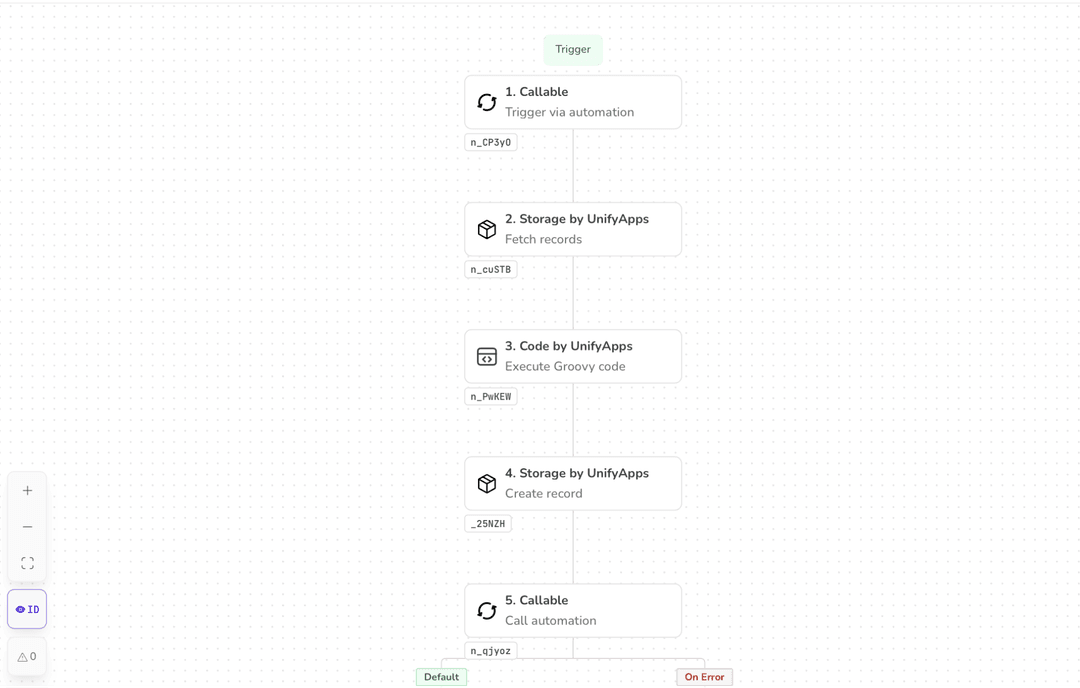
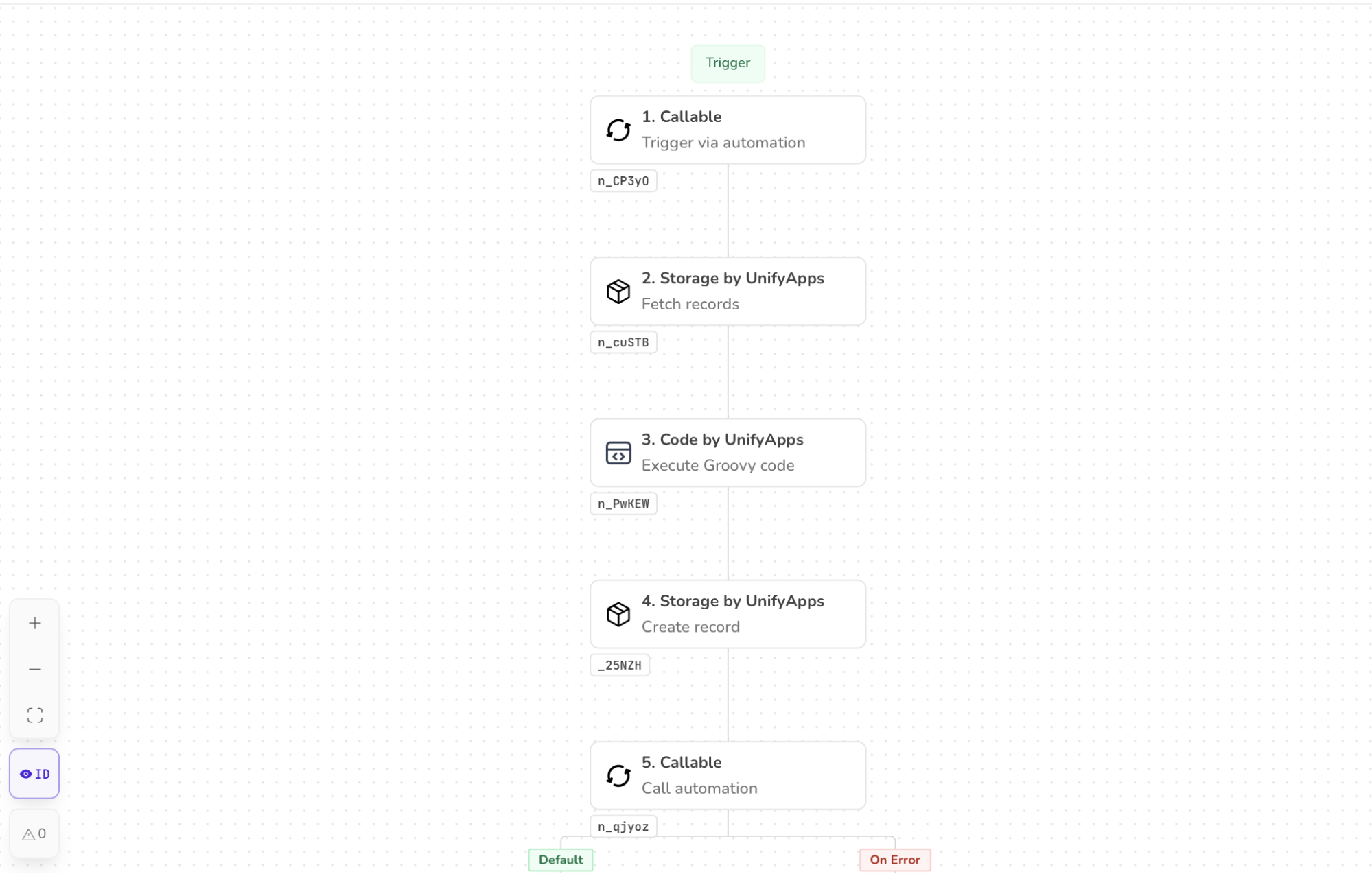
A Node ID is a unique identifier assigned to a node (step, action, trigger, or component) inside an automation or workflow.
A node = one unit of work.
Eg: “HTTP Requests”, “Send Email”, “If/Else Condition”, etc.
The Node ID uniquely identifies that step, even if:
Multiple nodes do the same thing
The node name changes
The workflow is duplicated or versioned
Common use cases
Execution Tracking & Debugging
When an automation runs, the engine logs things like:
Node ID
Start/end time
Inputs/outputs
Errors
Example:
“Execution failed at node node_42fa9”
Even if you rename:
“Send Slack Alert” → “Notify On Failure”
…the system still knows exactly which step failed.
2. Connecting Nodes Internally
Behind the scenes, workflows are graphs.
Instead of : "Send Email" → "Wait 5 Minutes"
The system stores: “ node_A1B2 → node_C3D4 “
This makes workflows:
Faster to execute
Easier to validate
Safer to refactor
3. Versioning & Workflow Diffing
When workflows are:
Version-controlled
Exported as JSON/YAML
Compared between environments (dev → prod)
Node IDs allow systems to:
Detect what actually changed
Migrate data safely
Reapply mappings
4. Conditional Logic & Branching
In complex workflows:
IF/ELSE
Switches
Loops
Conditions often point to:
Which node produced a value
Which node should execute next
Using Node IDs ensures:
Conditions stay valid
Branches don’t “lose” their targets
Advantages of using Node IDs
Stability: Names can change. IDs shouldn’t.
Precision: No ambiguity when multiple nodes do similar things.
Scalability: Essential for large, multi-branch workflows.
Maintainability: Refactoring without breaking references.