


Deploying your automation publishes the current saved state and makes the trigger active — until you deploy, changes are only drafts and the automation does not process live events.
Overview
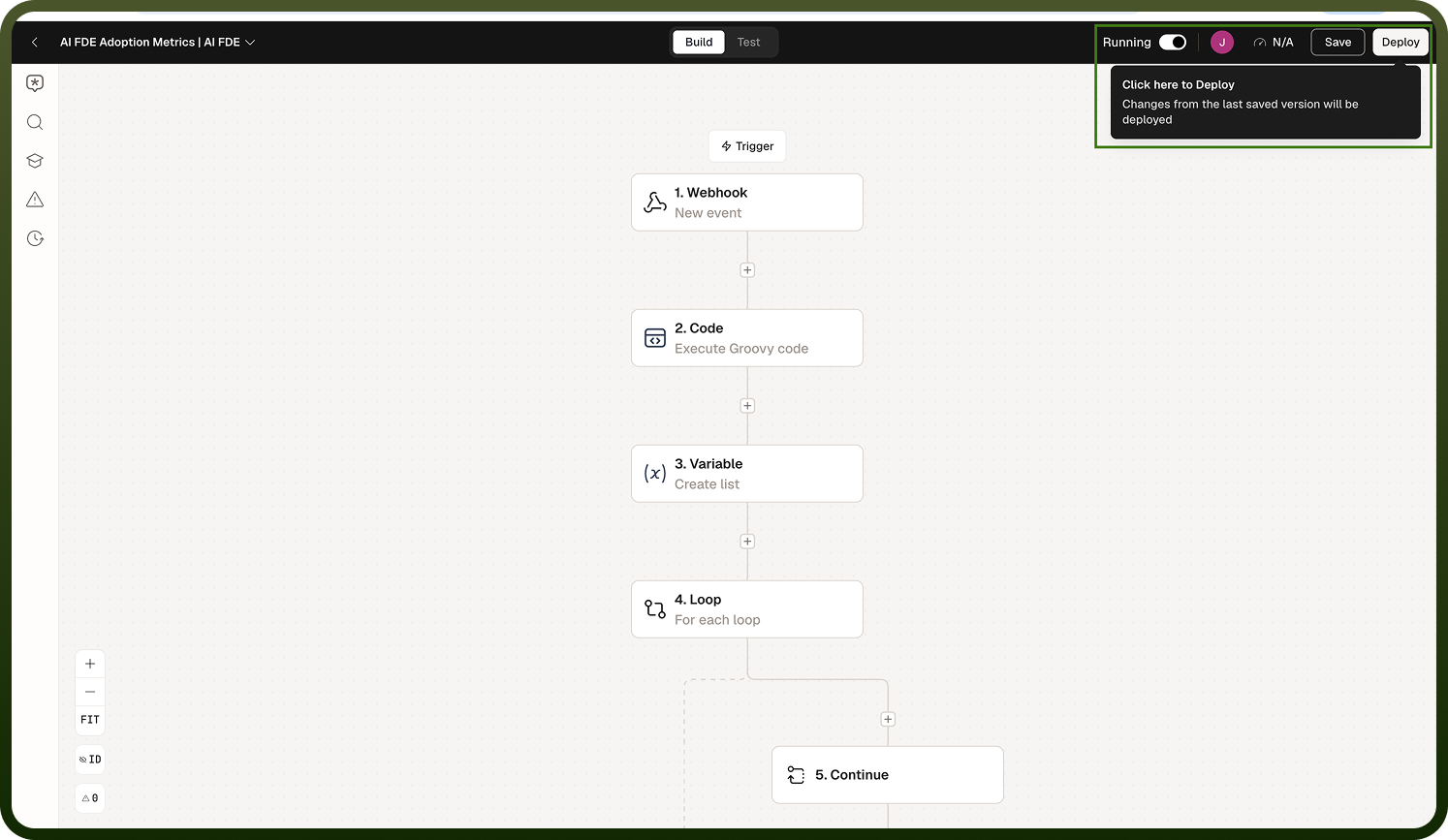
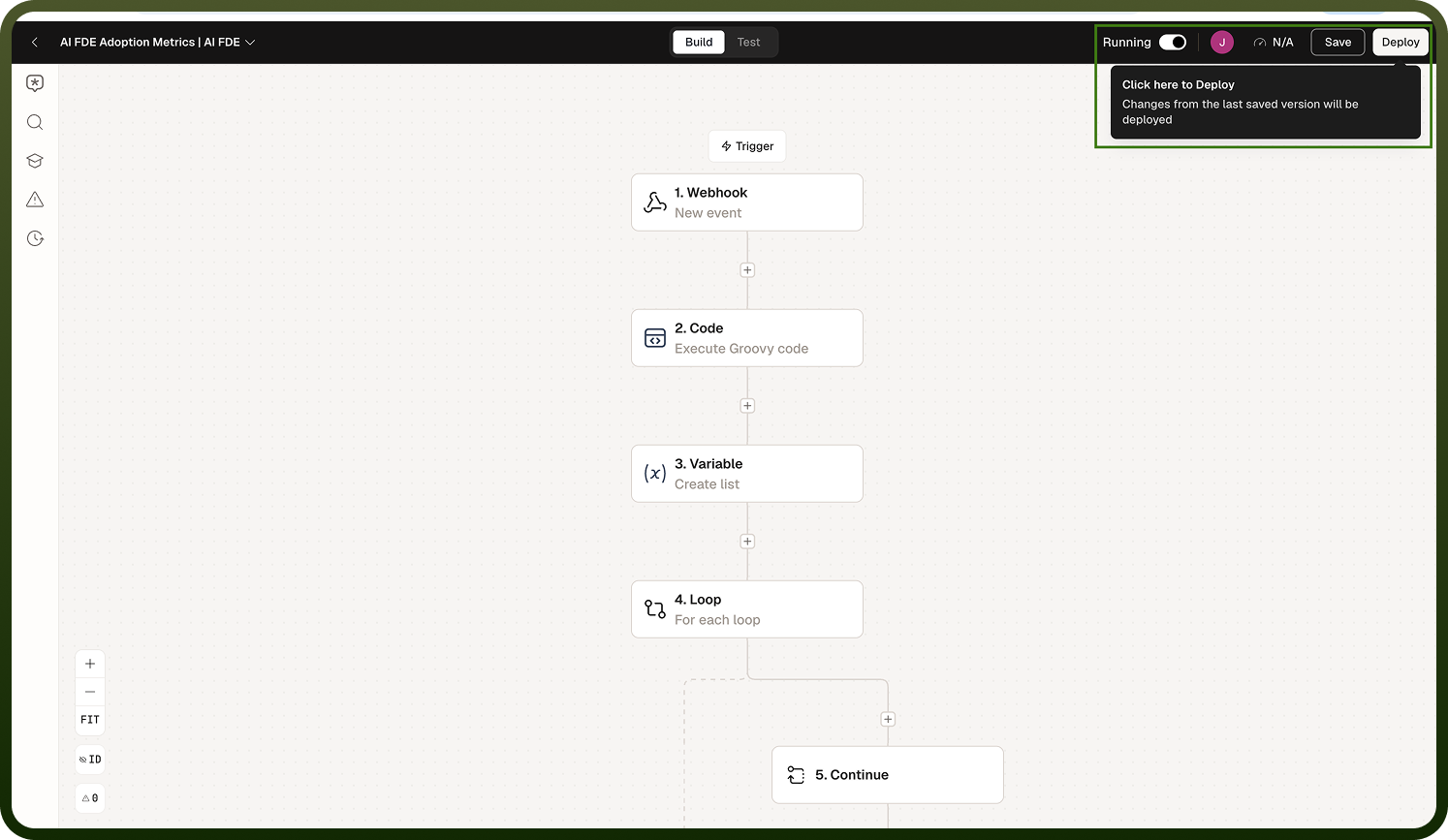
Deploying publishes the current state of your automation, making it active and ready to respond to real trigger events.
An automation must be deployed before it can run against live data. Until deployed, changes exist only in draft — they are not executed by the trigger and are not reflected in run history or monitoring. Each deployment creates a new version in the automation's version history, so you can track changes and restore previous states.
Deploying Your Automation
To deploy:
Save the automation (all nodes must be fully configured with no validation errors).
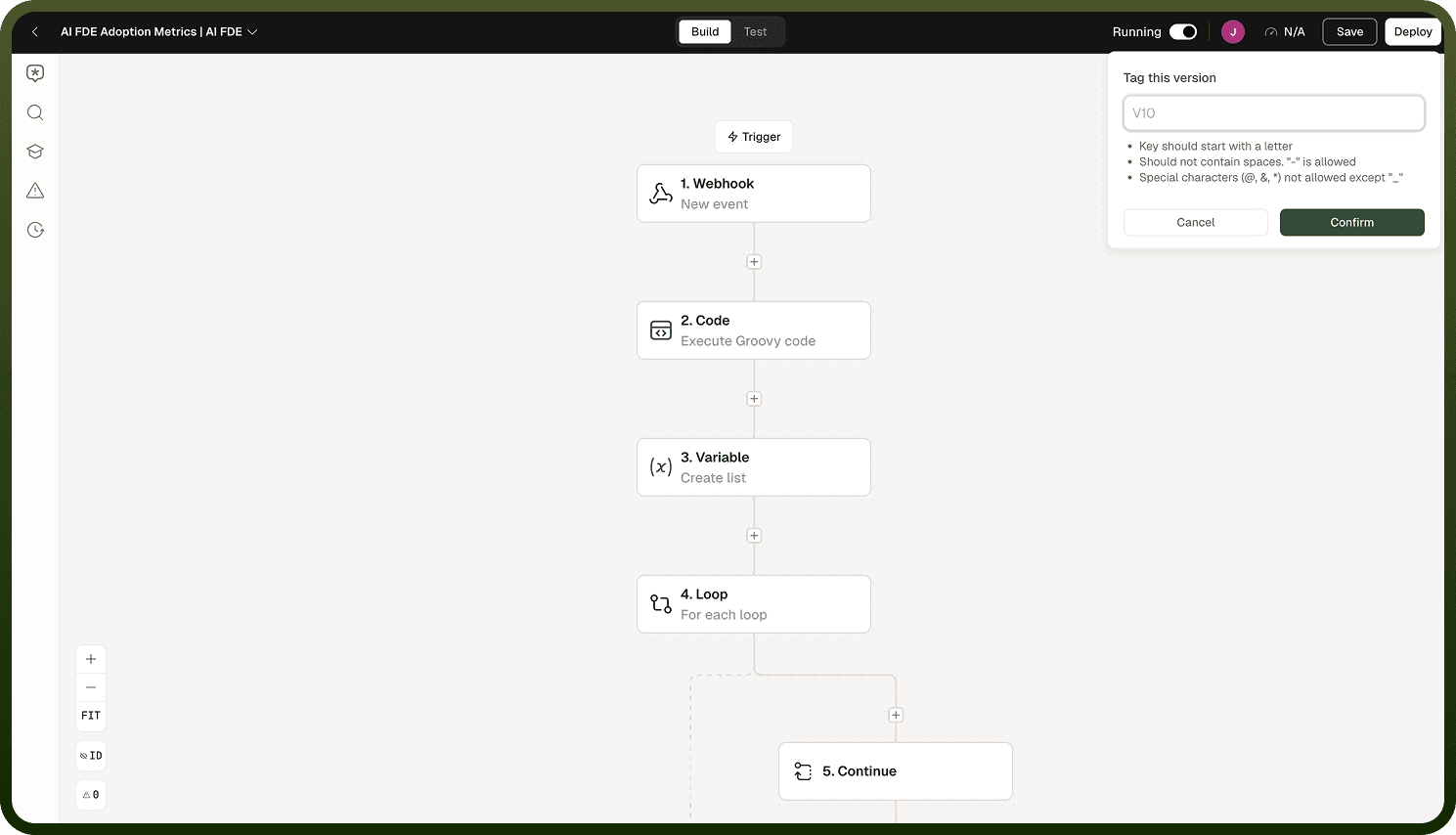
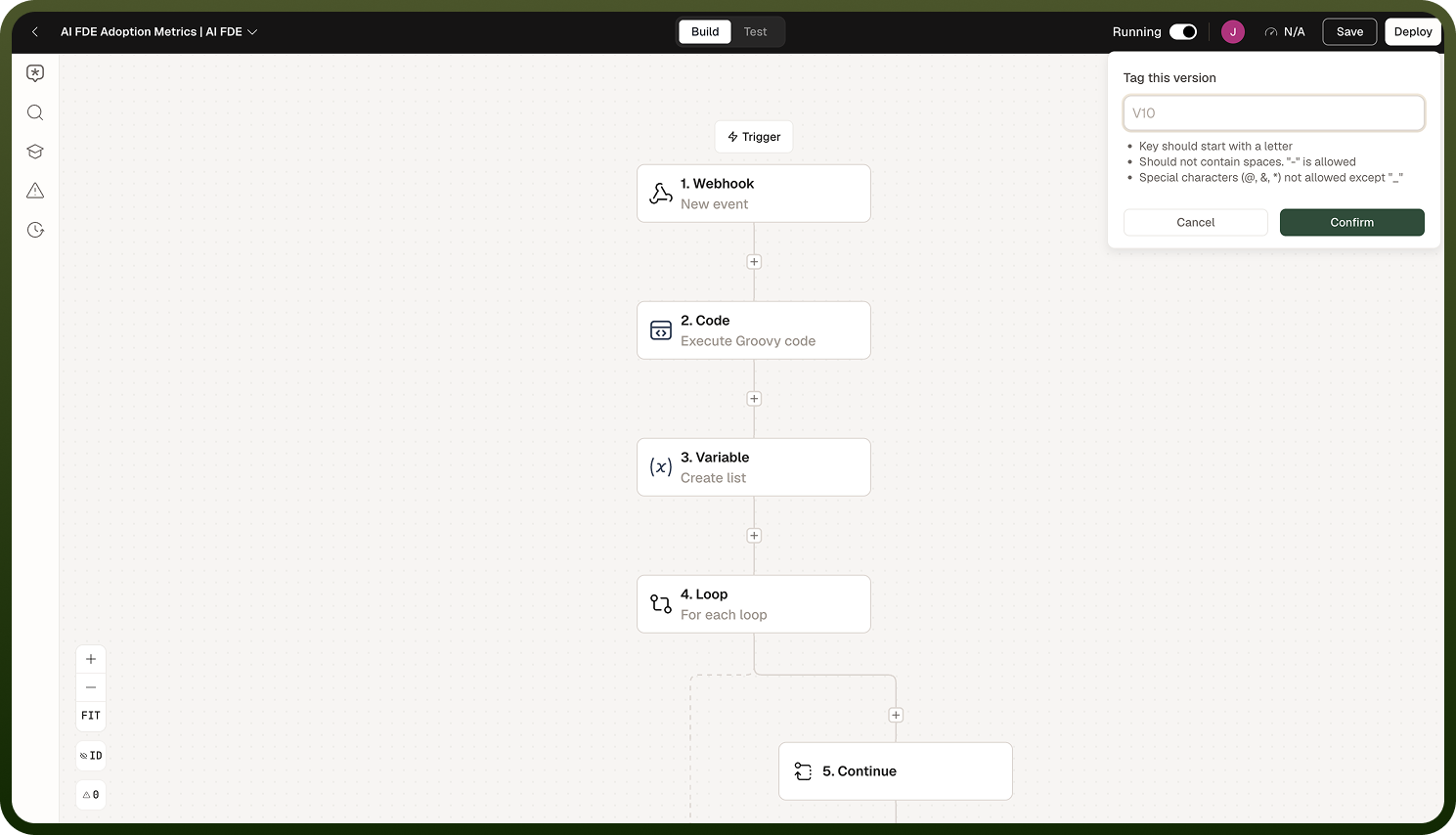
Click the "Deploy" button in the top right of the builder.
If there are configuration errors, the platform highlights the exact node that needs attention — fix the issue and deploy again.
Once deployed, the automation's status changes to "Live" and the version counter increments (V2, V3, and so on).
Note: If any node has an unresolved error (missing required field, invalid connection), the deploy is blocked. The error alert redirects you to the exact node that needs attention.
After Deploying
The trigger begins listening for events immediately after a successful deploy.
Any changes made after the last deploy are not live until you deploy again.
The previous version remains accessible in the Versions tab — you can restore it at any time.
Run history for the newly deployed version begins accumulating from the first triggered run.
Notes
Deployment is a one-click action, but the steps before it matter. To deploy smoothly:
Test the automation in the Test section before deploying — catch input and connection issues before they affect live data.
Check that all connections are valid and not expired before deploying; a connection that worked during testing may time out if credentials were rotated.
Deploy intentionally — every deploy increments the version; use Save frequently during editing and Deploy only when ready to go live.
After deploying, trigger a test run from the live trigger (e.g., create a record in the source app) and confirm the run appears in the Monitor tab with a Successful status.
An automation that passes testing and deploys cleanly is ready for production — but always confirm the first live run succeeded before considering the deployment complete.