


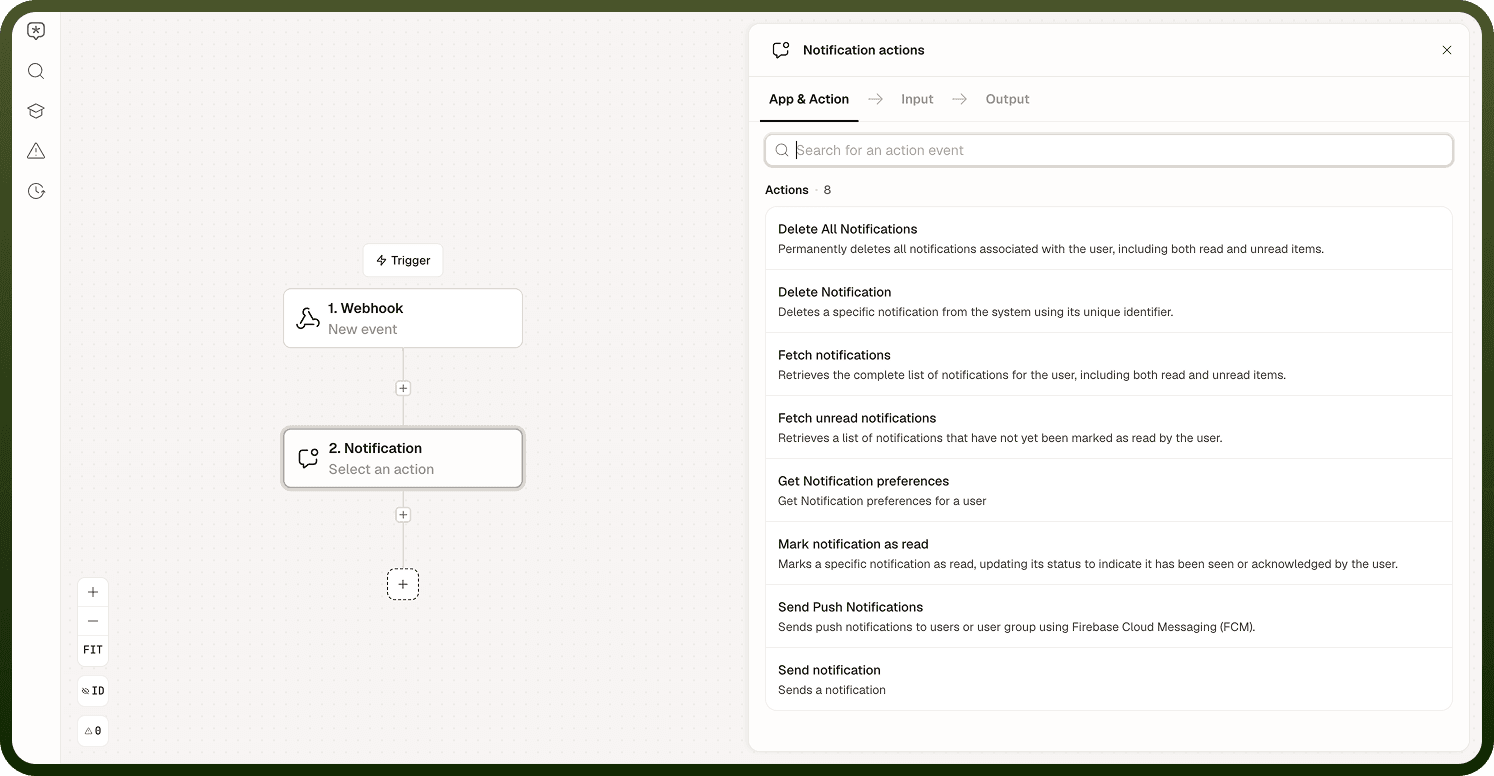
The Notifications by UnifyApps node manages and sends in-platform notifications from within an automation — to named users, user groups, or both. Use it to surface alerts, confirmations, and updates across workflows without building a separate notification pipeline.
Overview
The Notifications by UnifyApps node enables management and triggering of notifications across workflows. It provides a seamless way to manage and trigger notifications across various workflows, facilitating communication consistency, preference retrieval, and tailored alert delivery to boost user engagement.
Use Cases
Tracking Task Notifications — Project managers filter unread alerts by tags like "Approval" and "Mentions" to identify pending tasks quickly.
Configuring Notification Preferences — Administrators check user preferences to determine if email alerts are enabled for specific events like "Import Success."
Real-Time System Alerts — Platform admins send failed export notifications to user groups via predefined templates with actionable URLs.
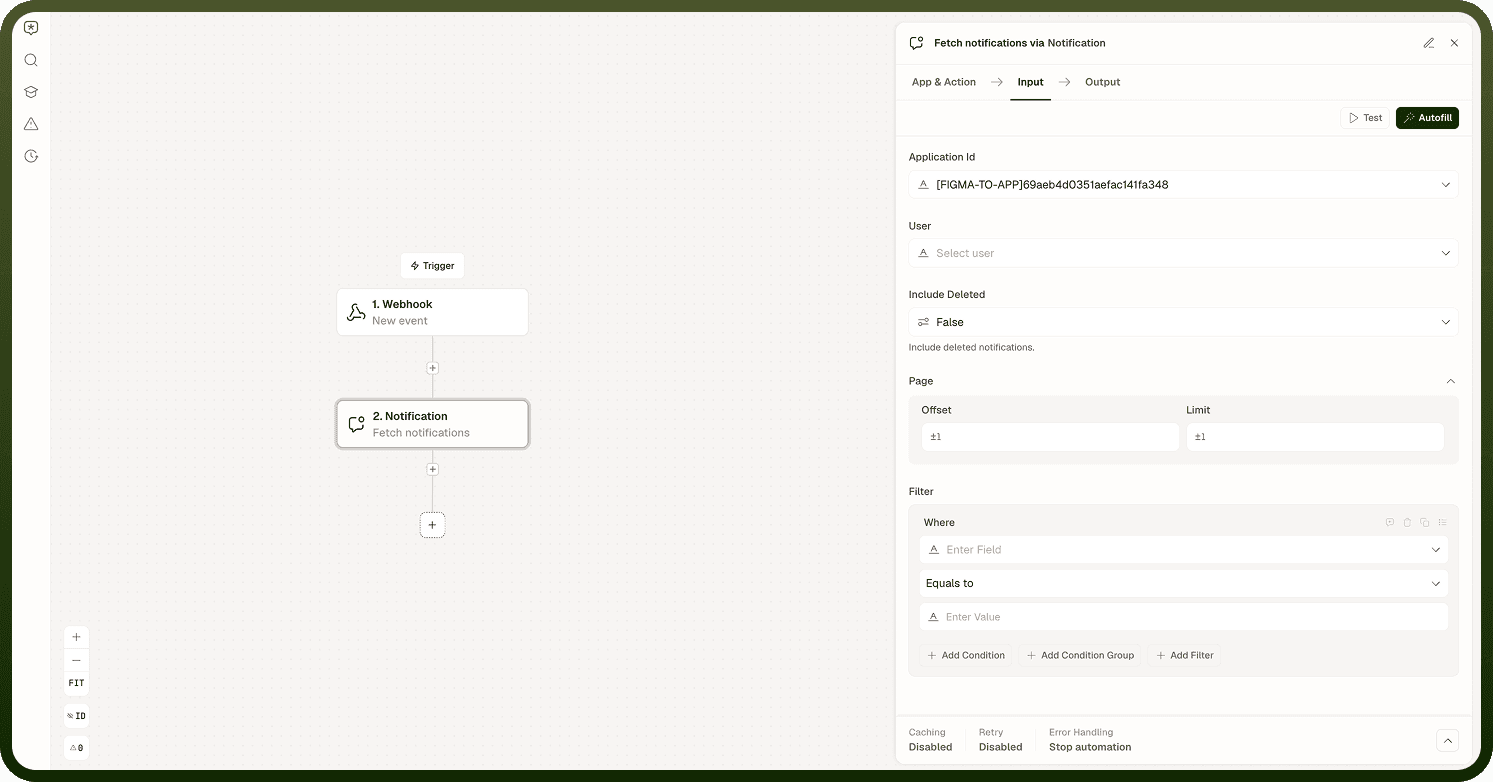
Fetch Notifications
Retrieve notifications based on specific tag filters with detailed metadata.
Inputs: Page (Offset and Limit); Filter (Tags Contains).
Output: Returns content, creation time, user IDs, tags, and notification status (read/unread).
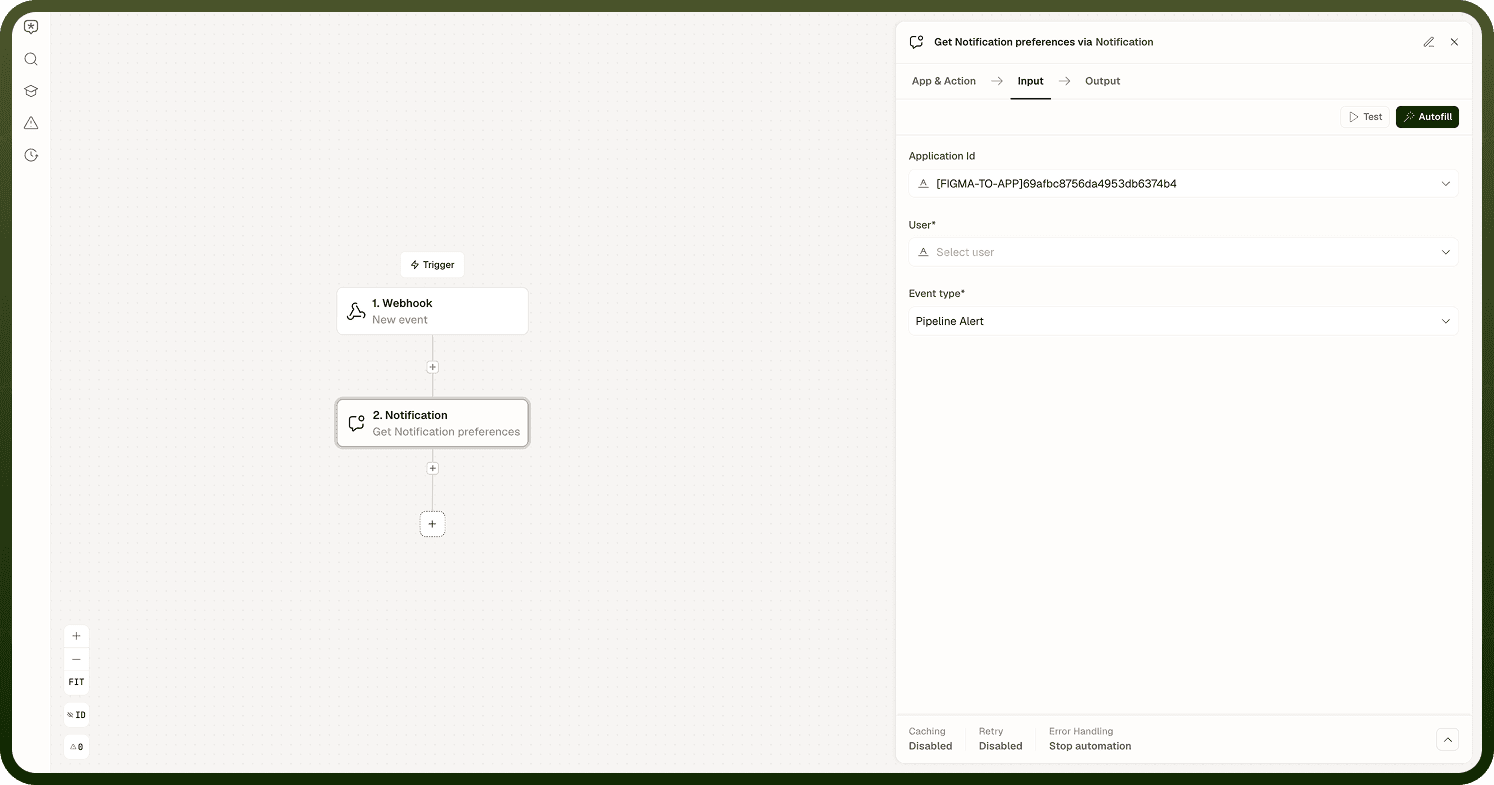
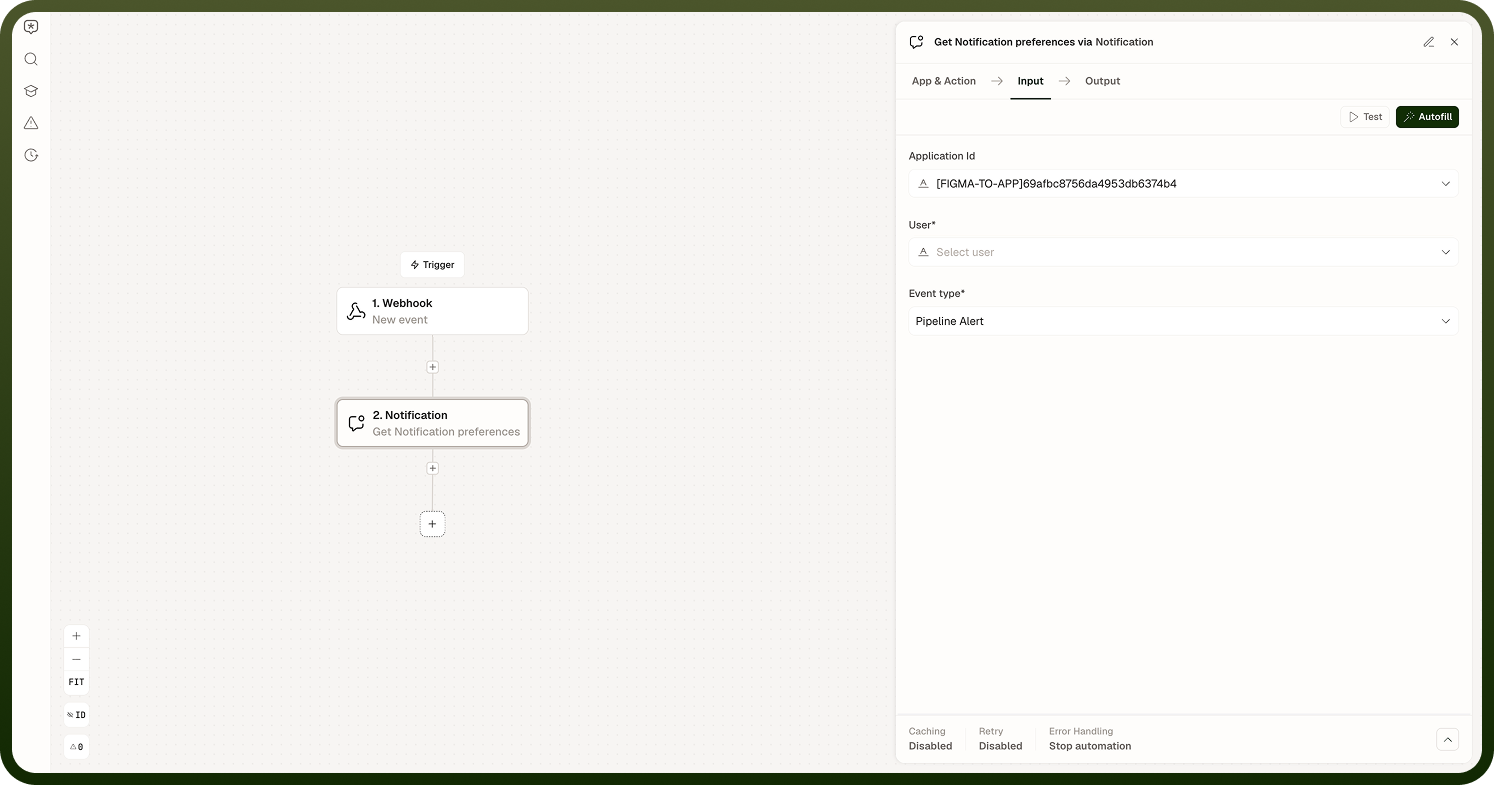
Get Notification Preferences
Fetch notification preferences for a specific user and event type.
Inputs: Application ID (optional); User (dropdown selection); Event Type (e.g., import success, export failure).
Outputs: Email (Boolean); In-App (Boolean).
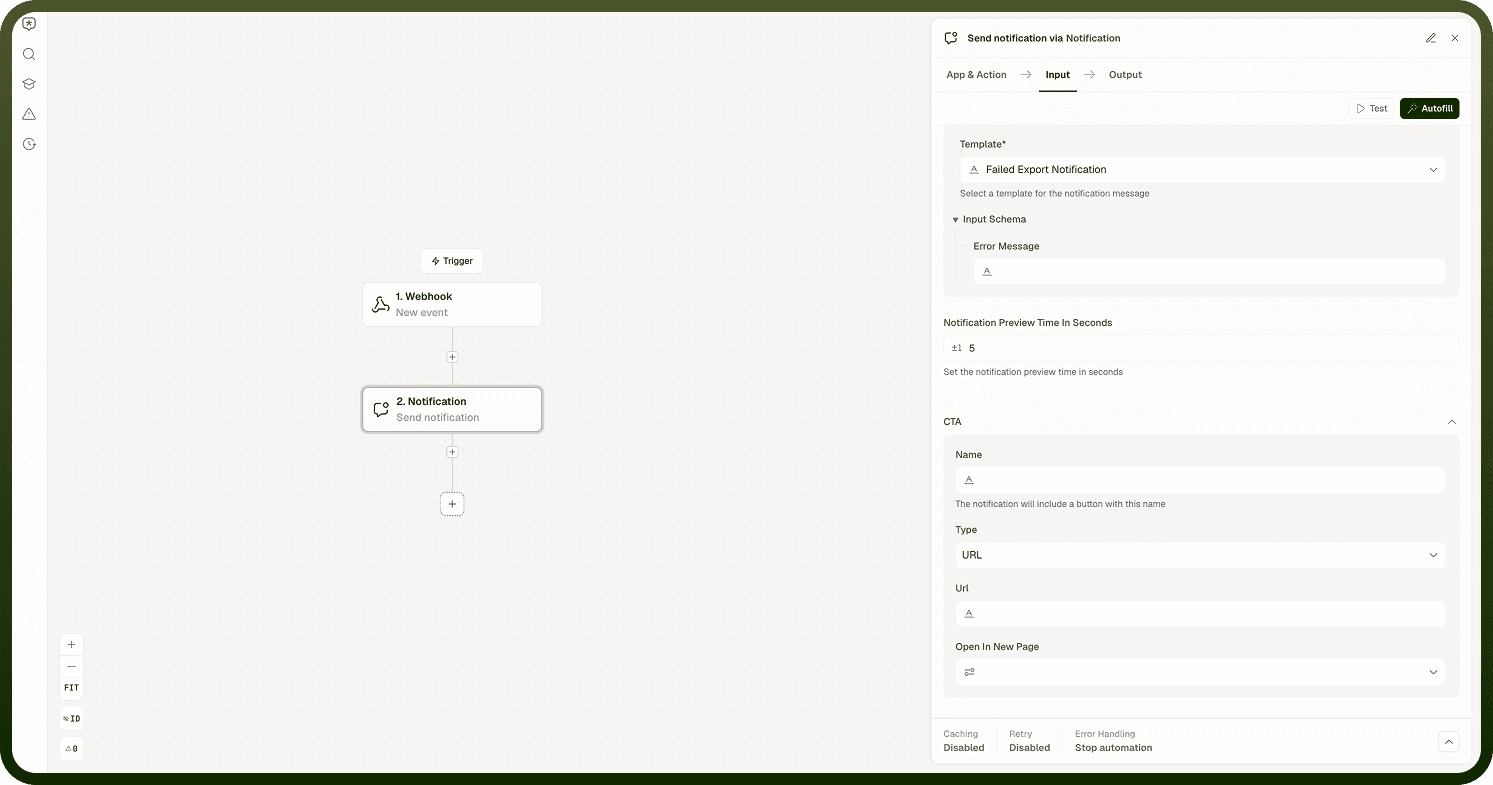
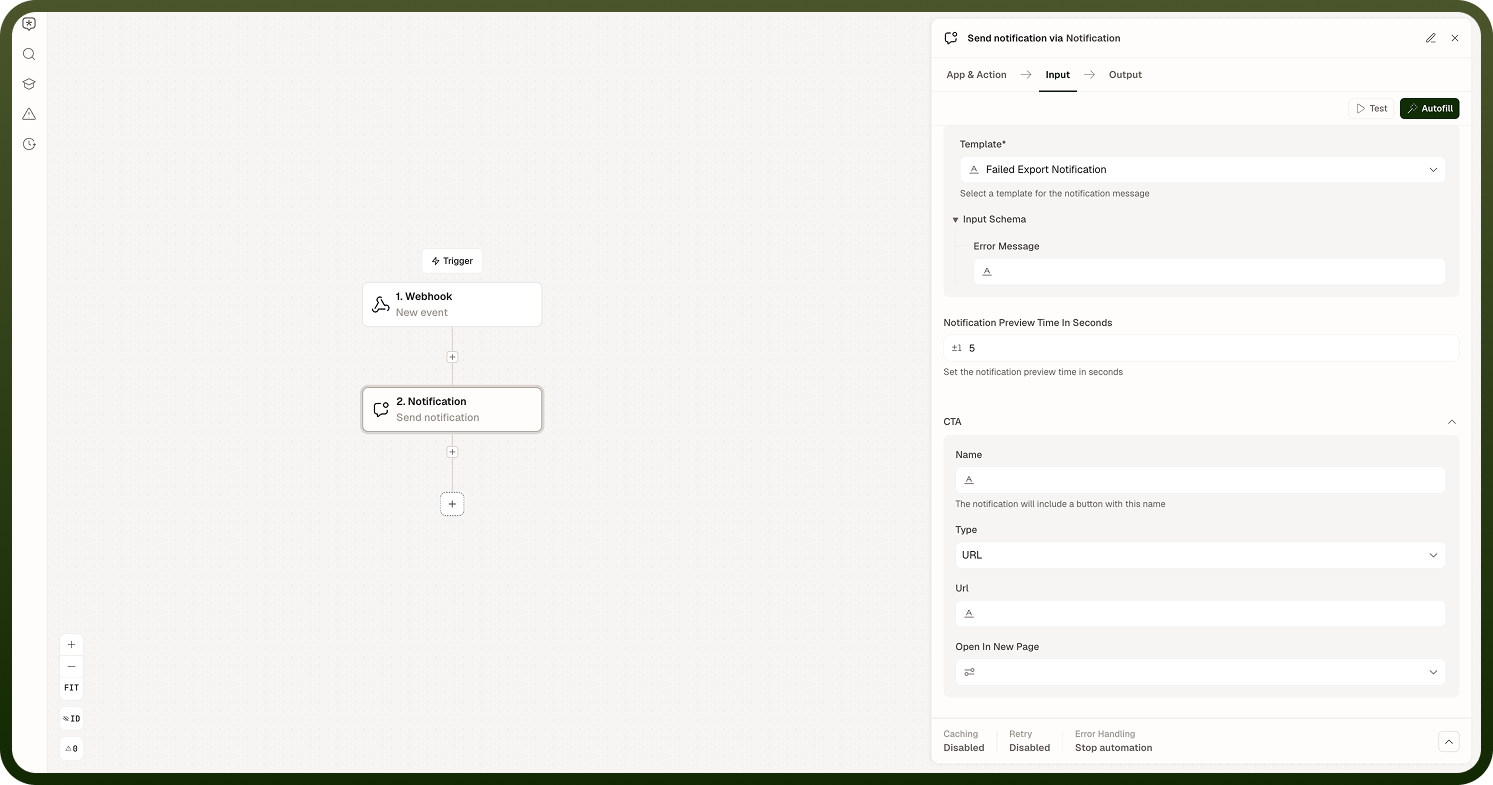
Send Notification
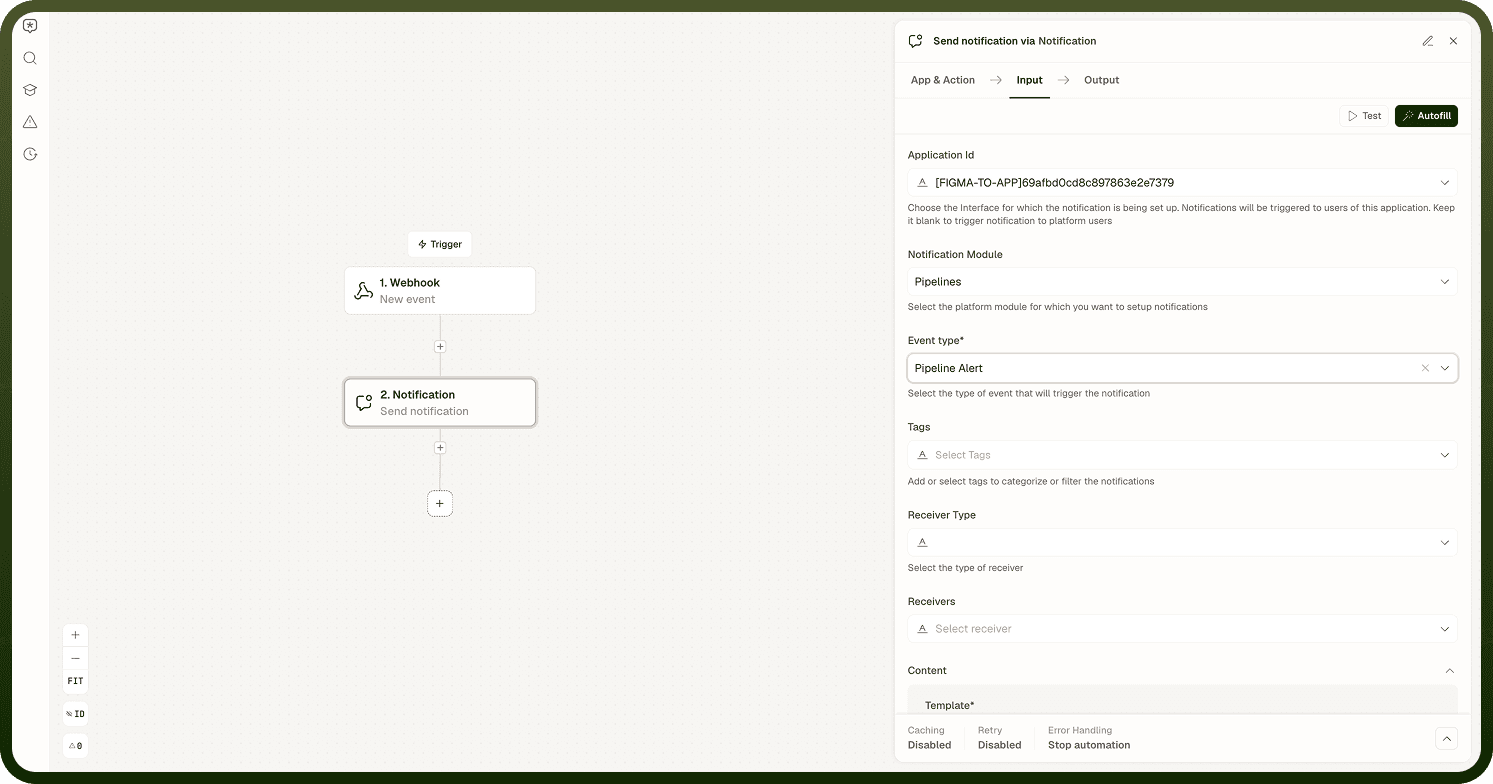
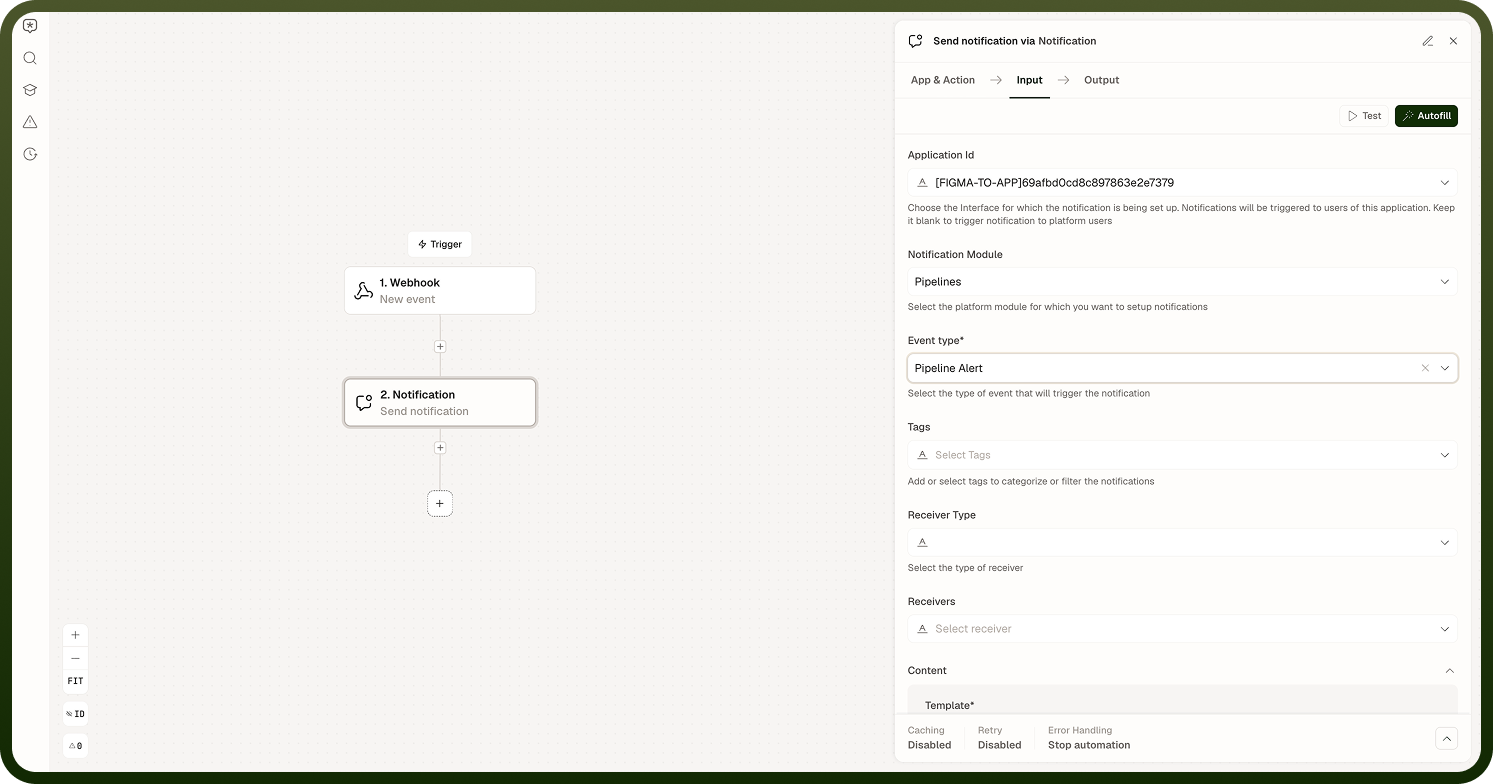
Trigger custom notifications for specific users or groups with real-time alerts.
Inputs:
Application ID (optional)
Event Type
Tags
Receivers — Users or User Groups
Content — Template, Error Message, Preview Time
CTA — Call to Action with Type and URL
Output: Confirmation with notification status, recipients, and metadata.
Delete All Notifications
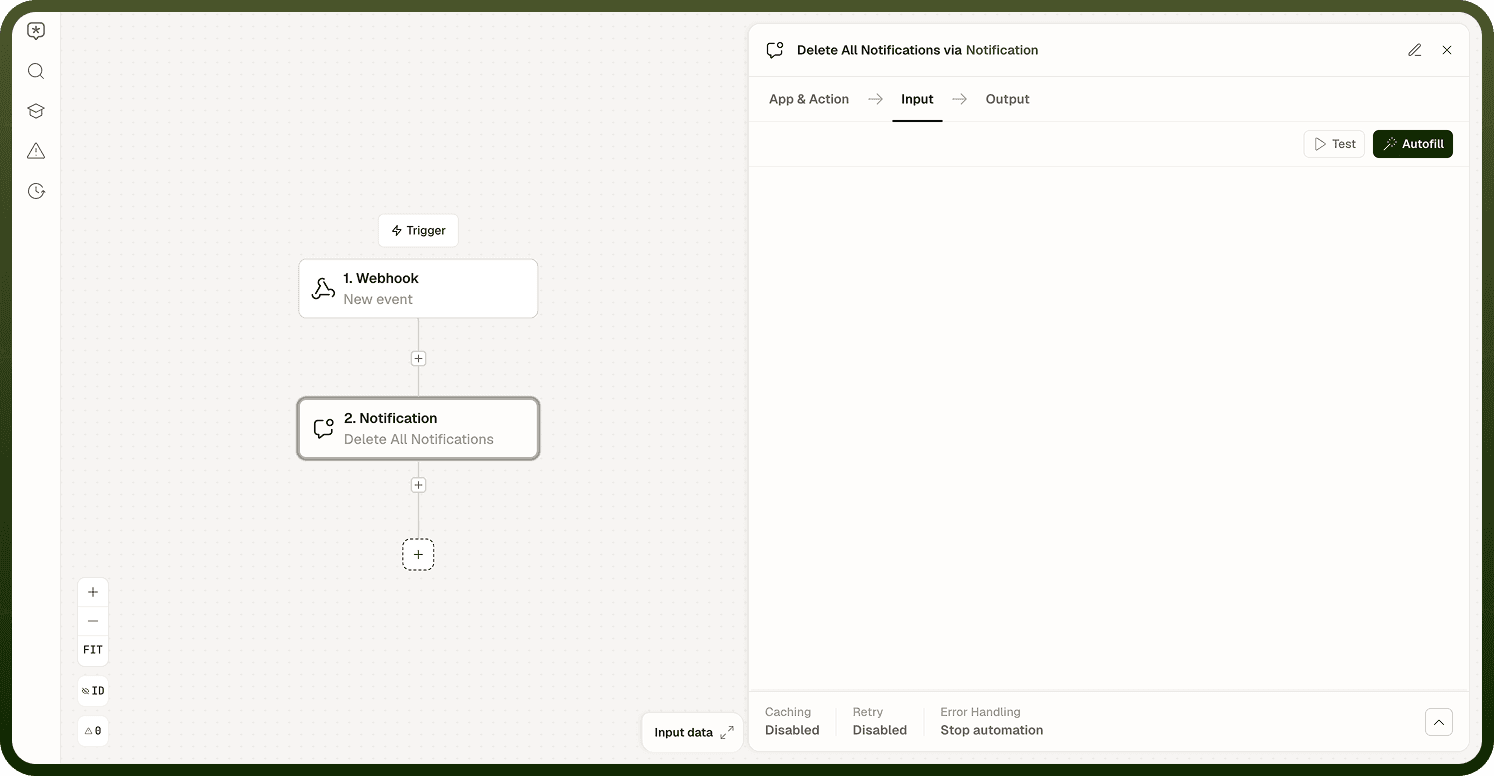
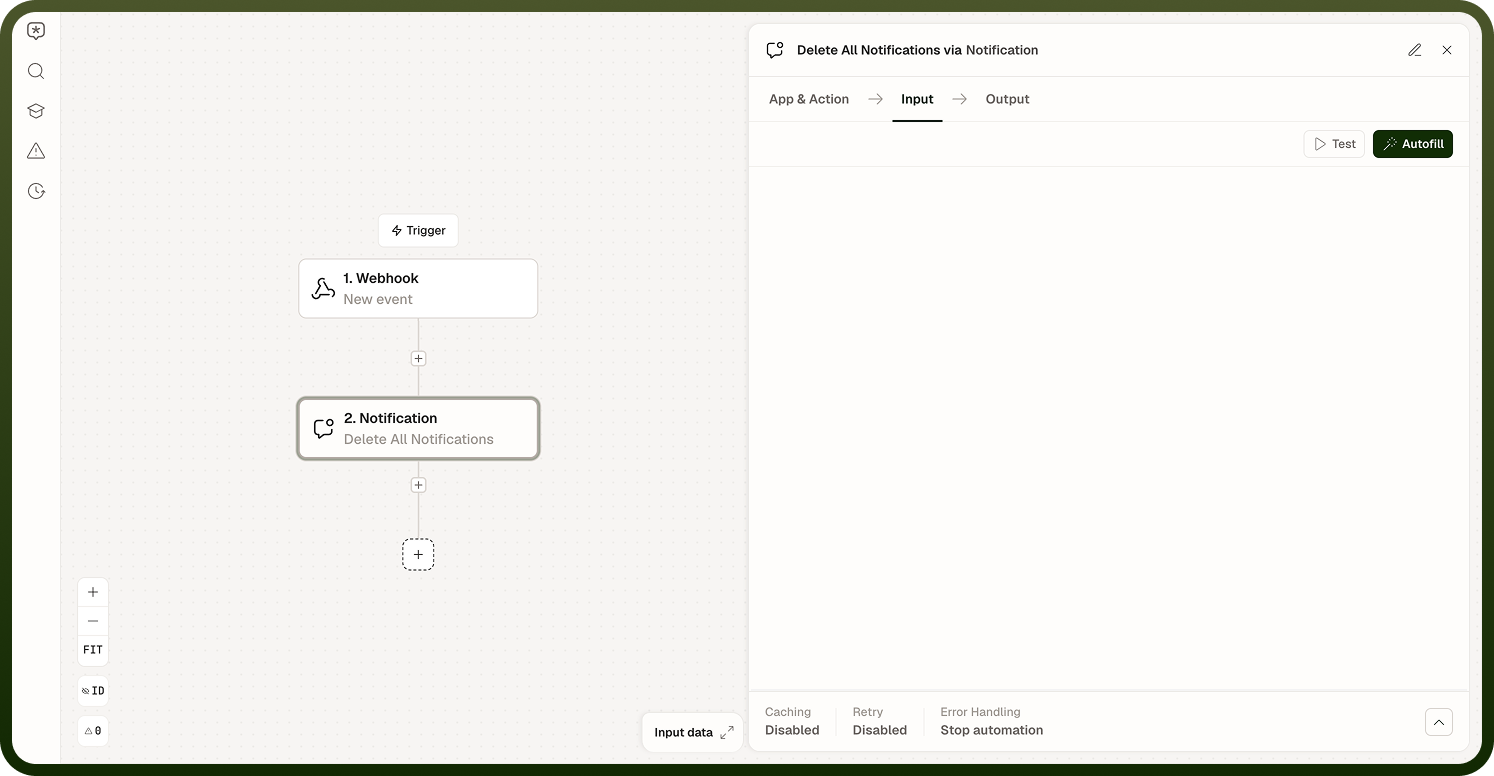
Permanently delete all notifications associated with the user, including both read and unread items.
Inputs: None — this action does not require any additional configuration.
Output: Boolean result confirming whether the deletion succeeded.
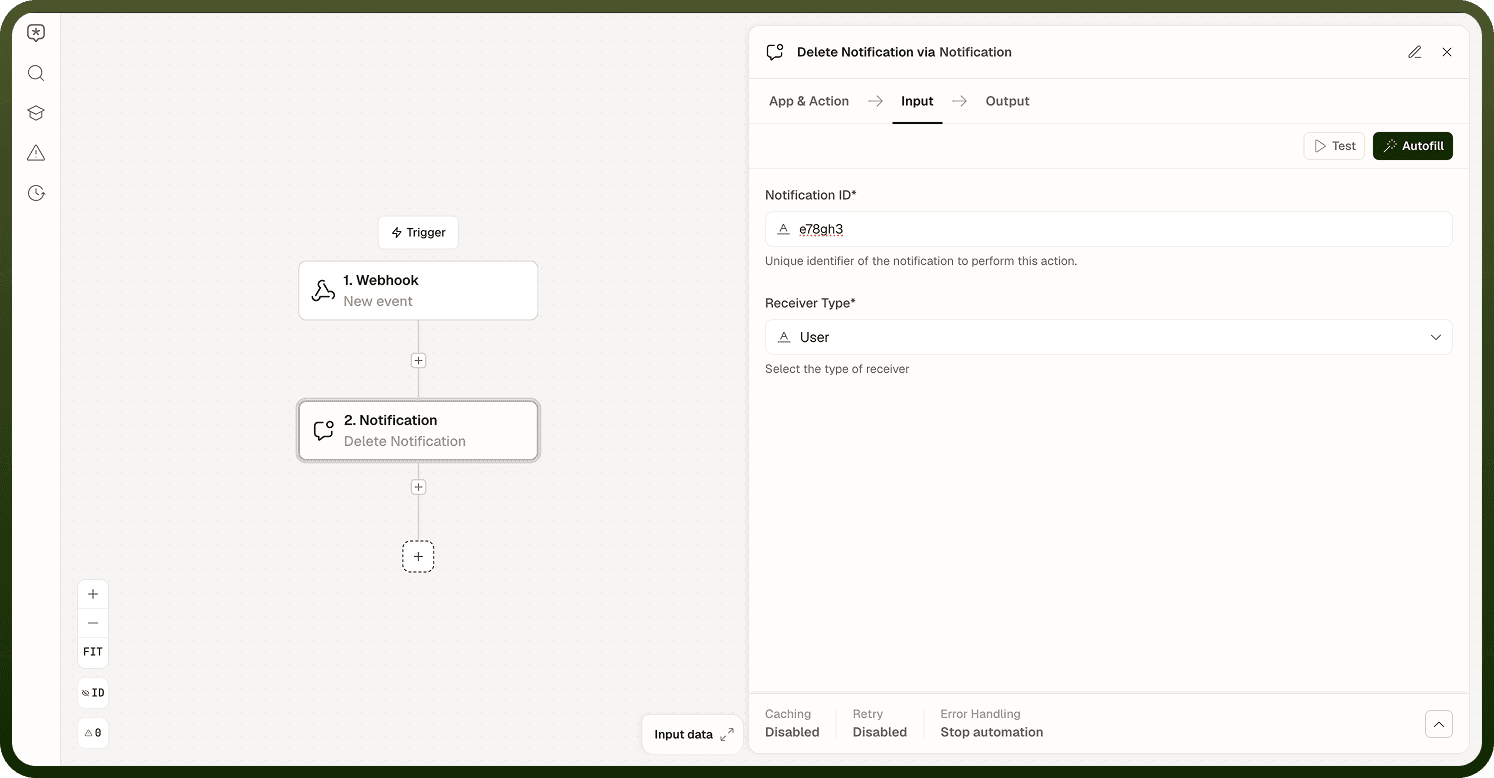
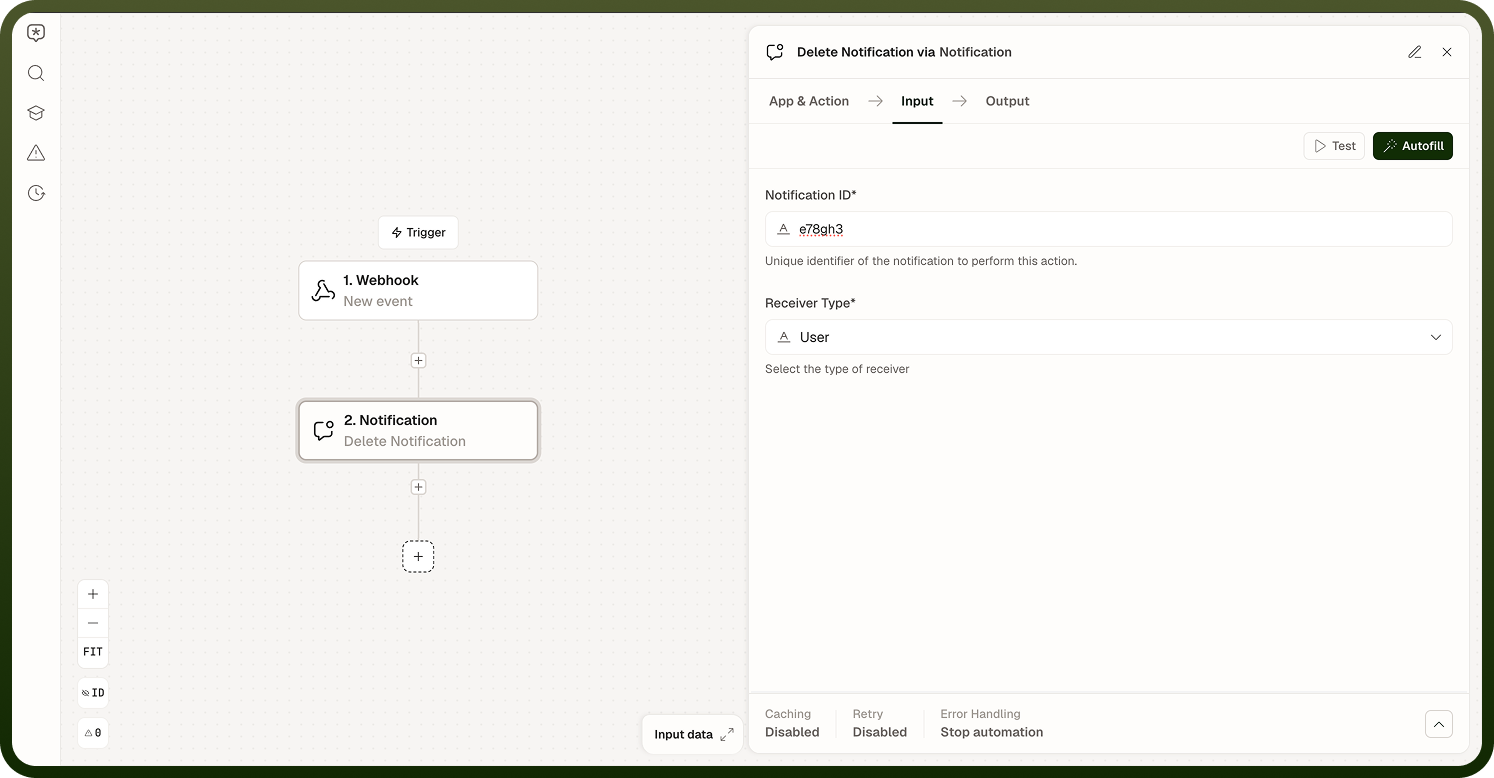
Delete Notification
Delete a specific notification from the system using its unique identifier.
Inputs: Notification ID (unique identifier of the notification to delete); Receiver Type — User or User Group.
Output: Boolean result confirming whether the deletion succeeded.
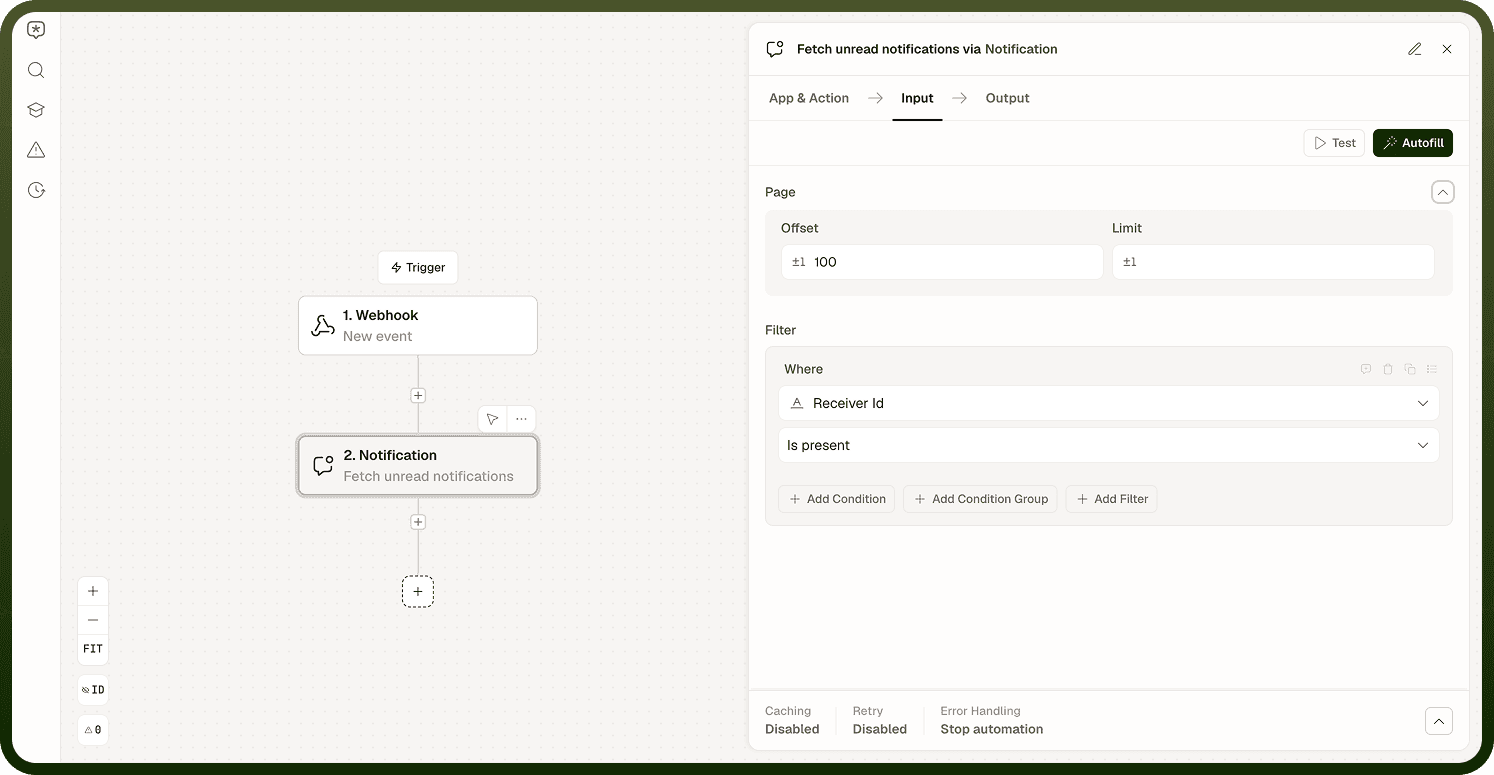
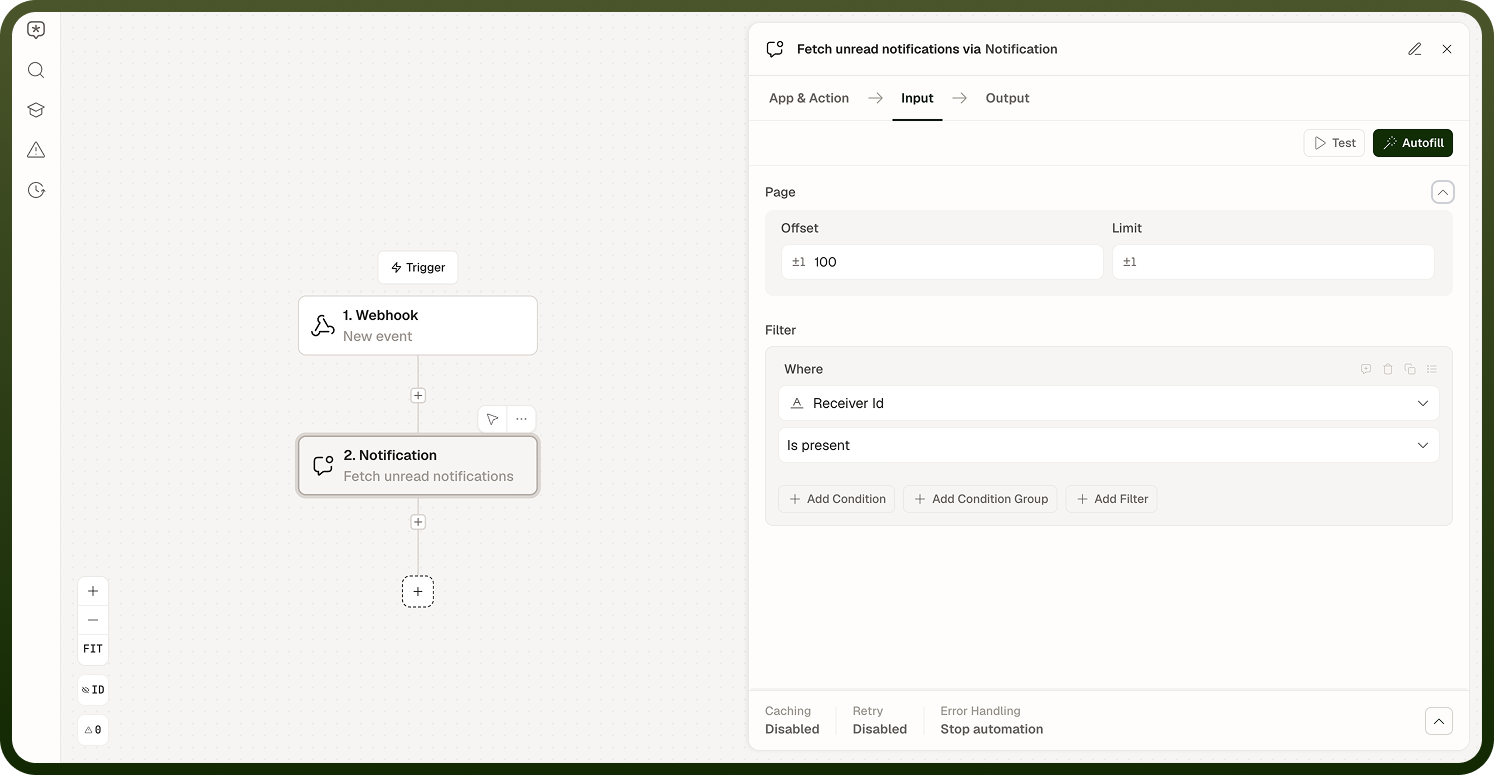
Fetch Unread Notifications
Retrieve a list of notifications that have not yet been marked as read by the user.
Inputs: Page (Offset and Limit); Filter (query conditions to narrow results).
Output: Returns a list of unread notifications, each with content, notification event type, tags, creation time, CTA, sender and receiver details, and read status.
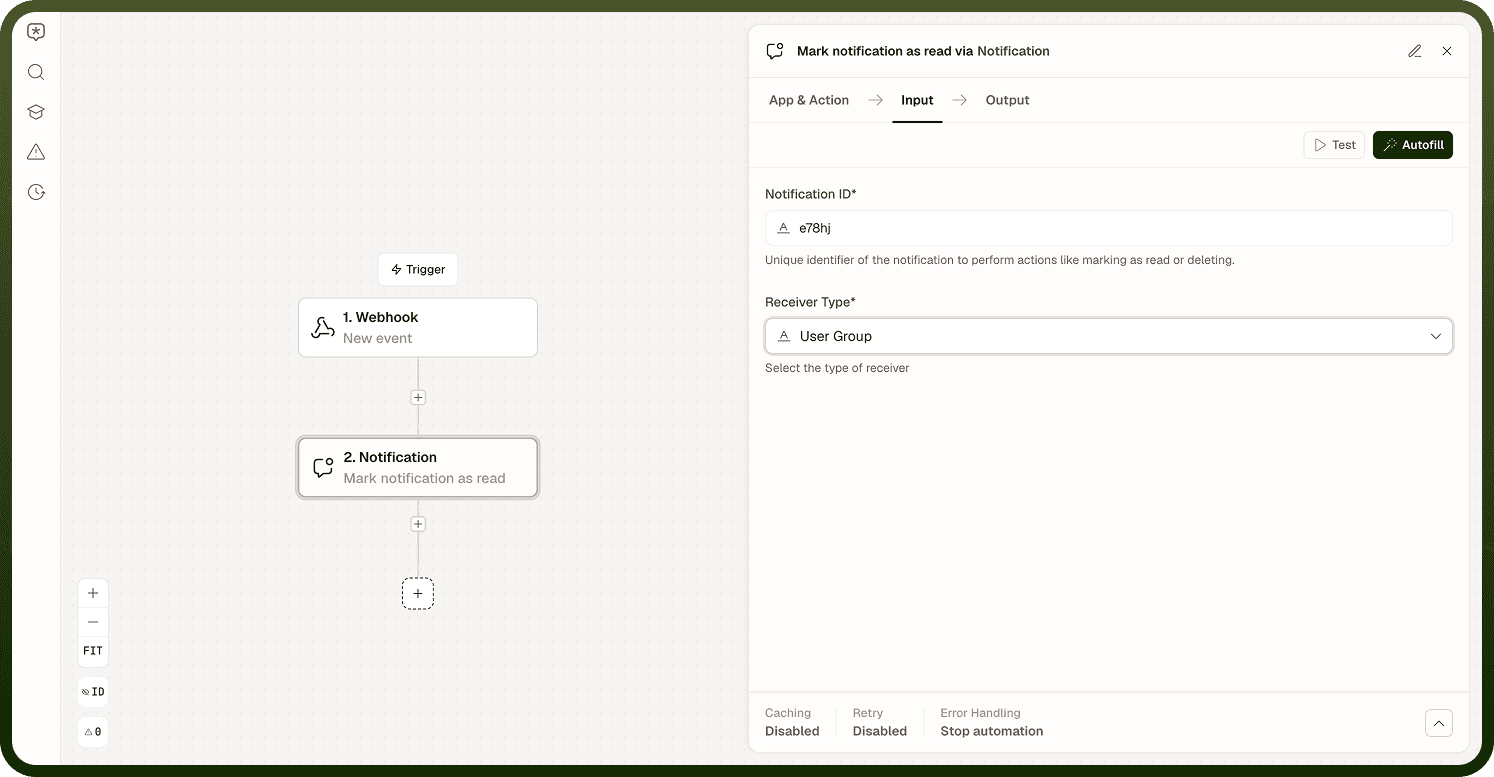
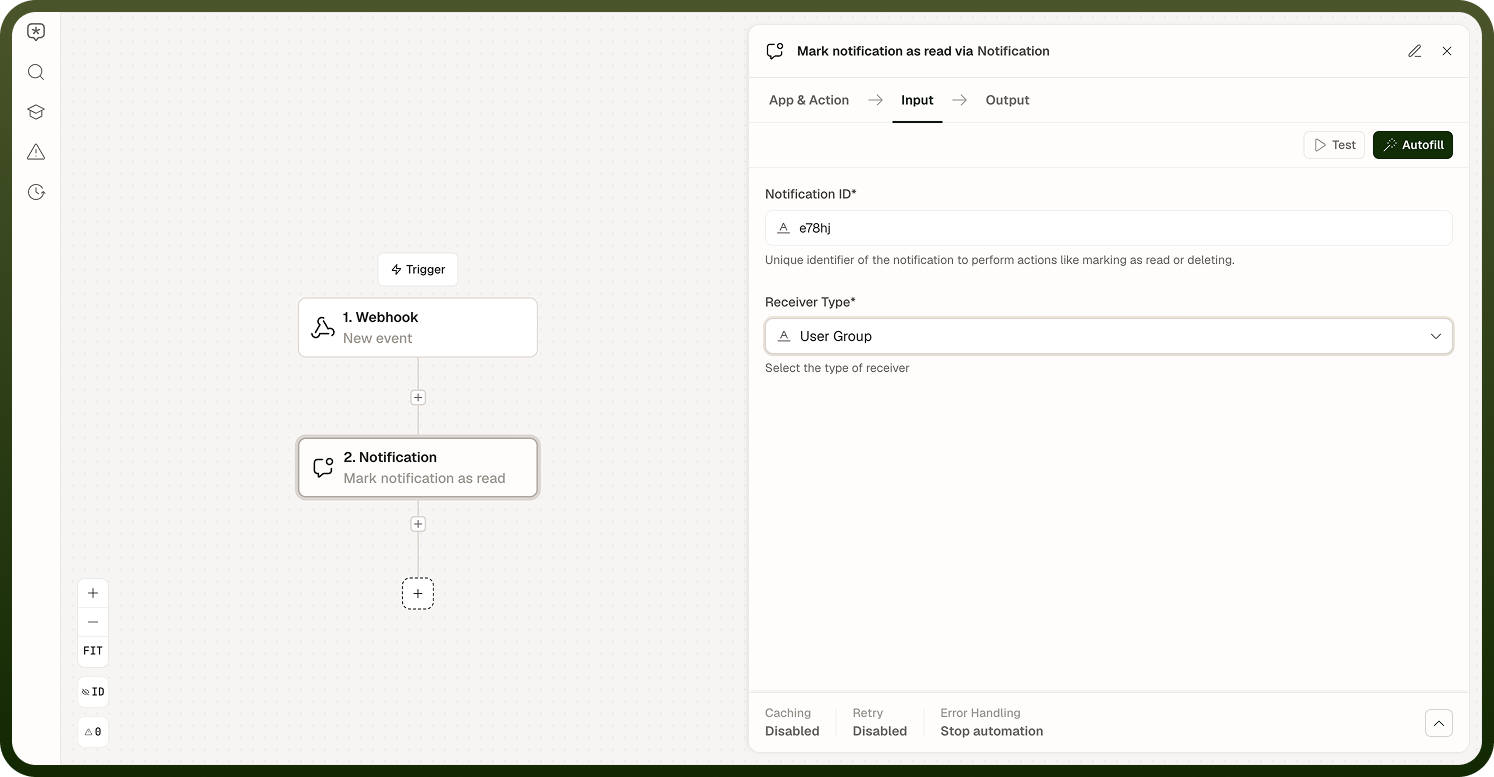
Mark Notification as Read
Mark a specific notification as read, updating its status to indicate it has been seen or acknowledged by the user.
Inputs: Notification ID (unique identifier of the notification); Receiver Type — User or User Group.
Output: Boolean result confirming whether the update succeeded.
Send Push Notifications
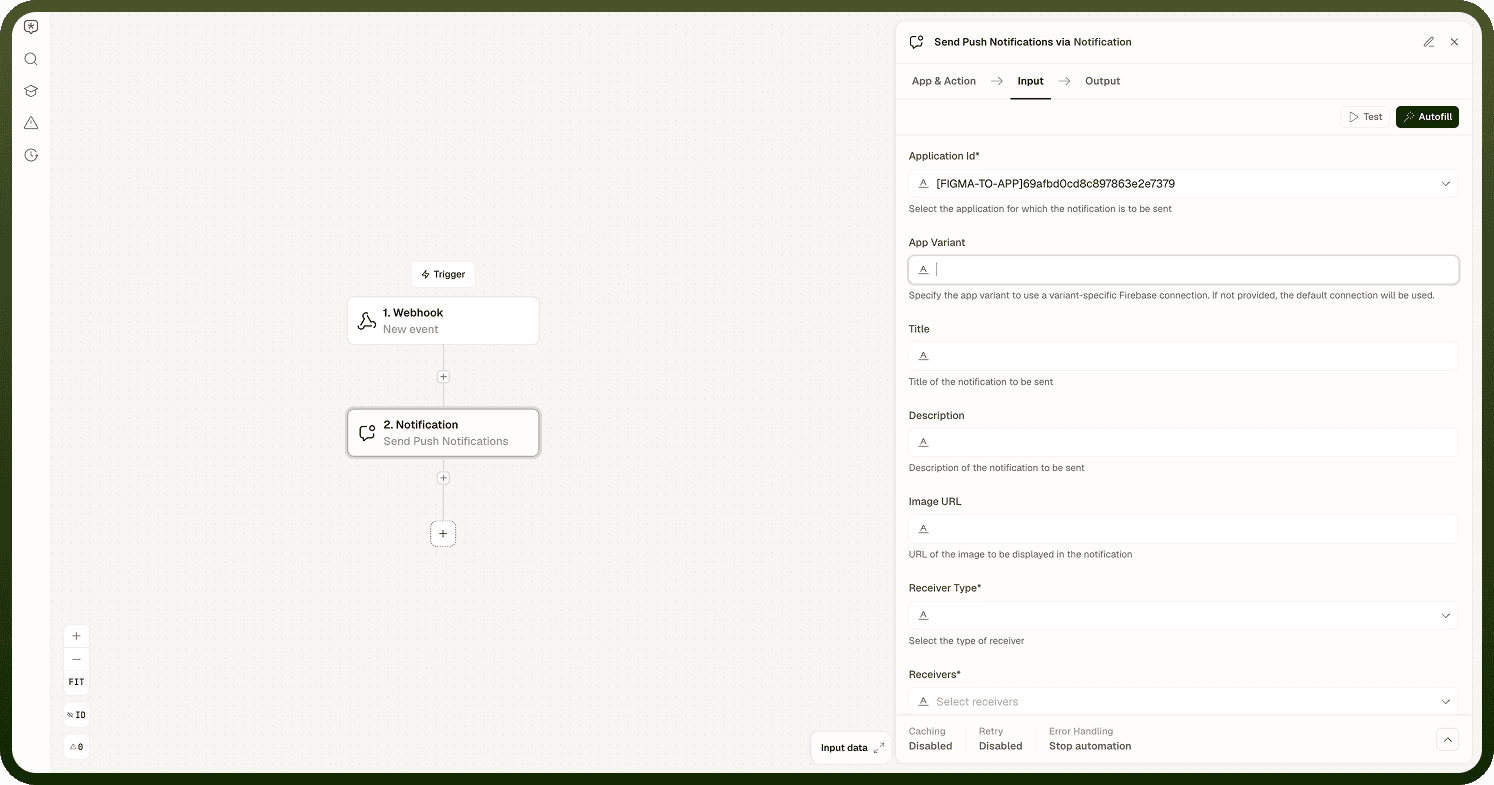
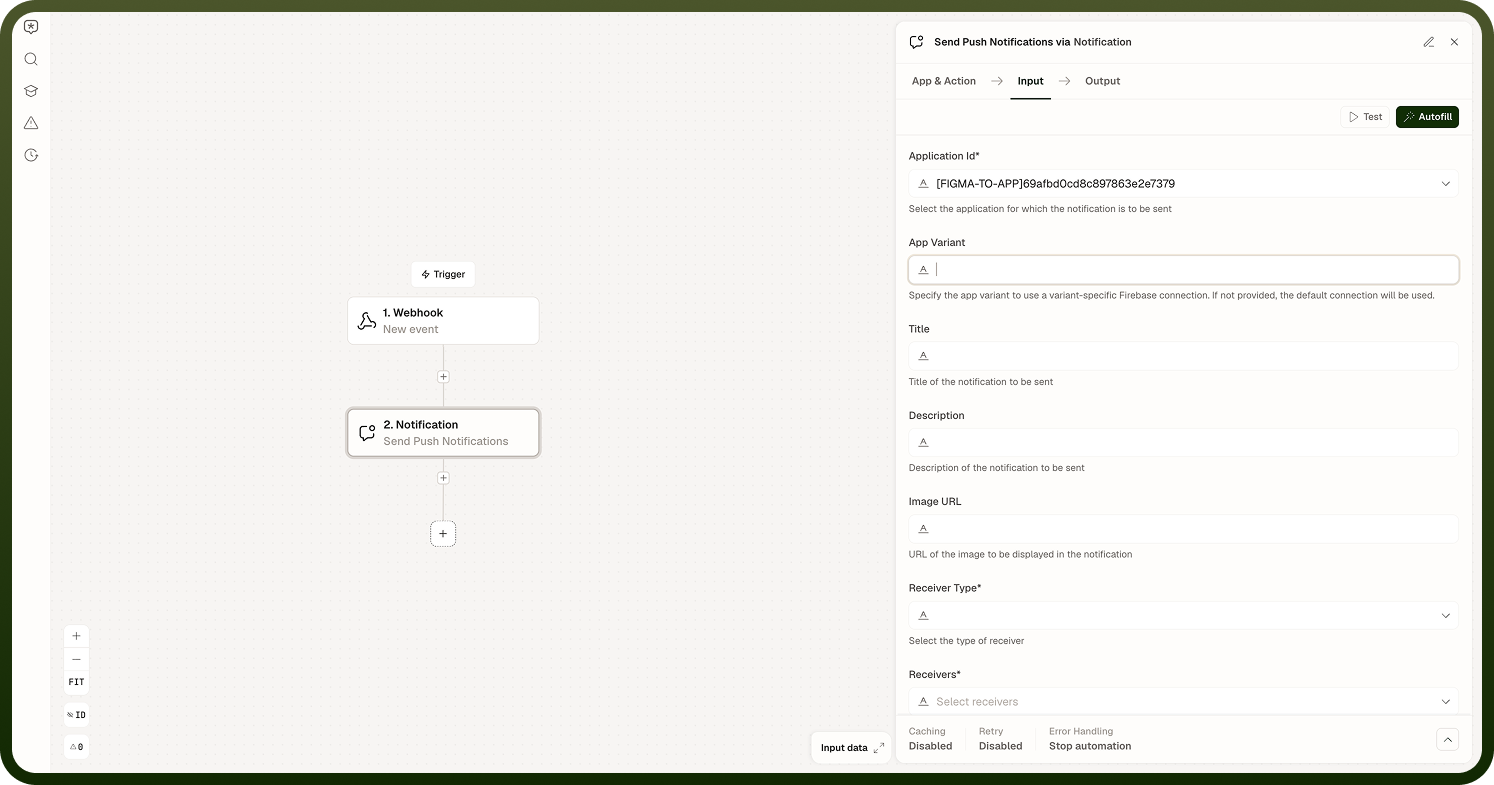
Send push notifications to users or user groups using Firebase Cloud Messaging (FCM).
Inputs:
Application ID — the application to send the push notification for.
App Variant (optional) — use a variant-specific Firebase connection; the default connection is used if left blank.
Title and Description — the notification's title and body text.
Image URL — image to display in the notification.
Receiver Type — User or User Group.
Receivers — the specific users or user groups to notify.
Priority — High or Normal (defaults to Normal).
Data — Type, set to Notification Click or Reset Data; when Notification Click is selected, also specify the Page and its Page Params.
Output: Boolean (success) indicating whether the push notification was sent.
Notes
Keep these behaviors in mind when using the Notifications by UnifyApps node:
Notification delivery is asynchronous — the automation sends the notification and continues immediately without waiting for it to be read or acted on.
Use a notification template for recurring message types; reserve inline messages for one-off or highly dynamic content.
When addressing a user group, membership is resolved at send time — adding a user to the group after the notification is sent does not retroactively deliver to them.
The Fetch Notifications action returns notifications based on the filters you set — use tag filters to narrow results to the categories relevant to your workflow.
Use Get Notification Preferences before sending to check whether a user has email or in-app alerts enabled for the event type you are triggering.
Combining preference checks with targeted delivery ensures notifications reach the right people through the right channels.