


The Stop node immediately ends execution of the branch it is on — allowing any parallel branches in the same automation to continue running normally — and exits cleanly without raising an error.
Overview
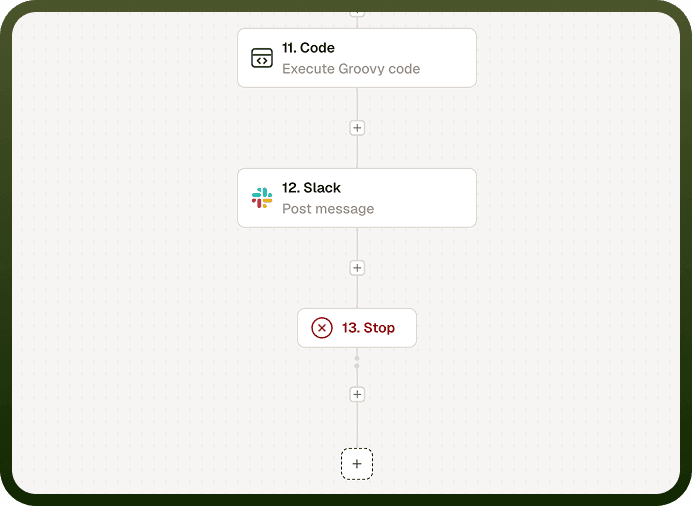
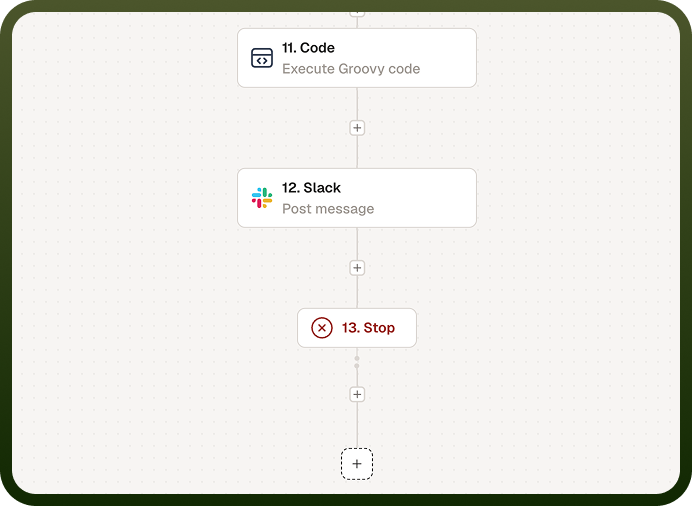
The STOP Node serves as a definitive endpoint for a specific branch or path within your automation sequence. Rather than processing or transforming data, it halts execution of the current branch while allowing parallel branches to continue independently. It functions like a "dead end" sign in your automation.
Key Characteristics and Behavior
Immediate Termination — The node immediately terminates branch execution without passing data forward or processing subsequent nodes in that pathway.
Branch-Specific Impact — The STOP Node affects only its immediate branch. When automations contain multiple parallel branches, other branches will continue executing normally, making this feature suitable for conditional termination scenarios.
Clean Exit — Unlike error states that may create hanging processes or exception-filled logs, the STOP Node provides a clean, intentional exit from the workflow.
Notes
Keep the following in mind when using the Stop node:
Stop ends only the branch it is placed on — it does not cancel parallel branches or mark the overall automation run as failed.
Because Stop exits cleanly, downstream run monitoring shows the branch as completed rather than errored. This is intentional and distinguishes a deliberate early exit from an unexpected failure.
Use Stop at the end of a conditional branch when the branch's work is done and there is nothing further to do, rather than leaving an empty branch that could mislead readers of the canvas.
Stop is not an alternative to error handling — if you need to signal that something went wrong, raise an error or route to an error path instead.
Stop is the cleanest way to terminate a branch deliberately — use it to communicate intent on the canvas rather than letting a branch simply end without a defined exit point.