


The Test HTTP API node is a sandbox tool for building and debugging HTTP-handling logic in an automation — before connecting to a real service. It exposes simple, predictable sample operations so you can develop and test your request structure, parameter mapping, and response handling without making live API calls.
Overview
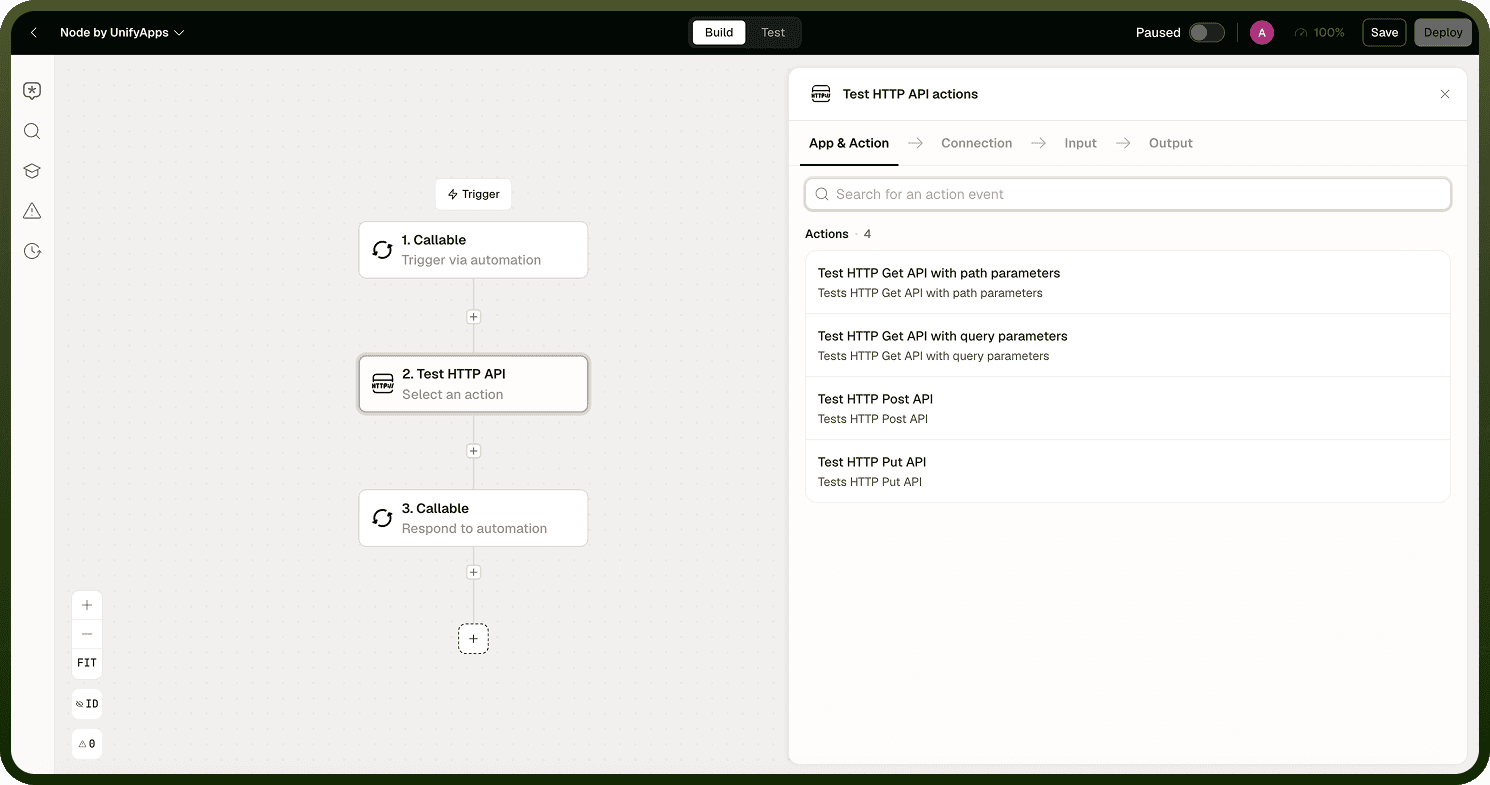
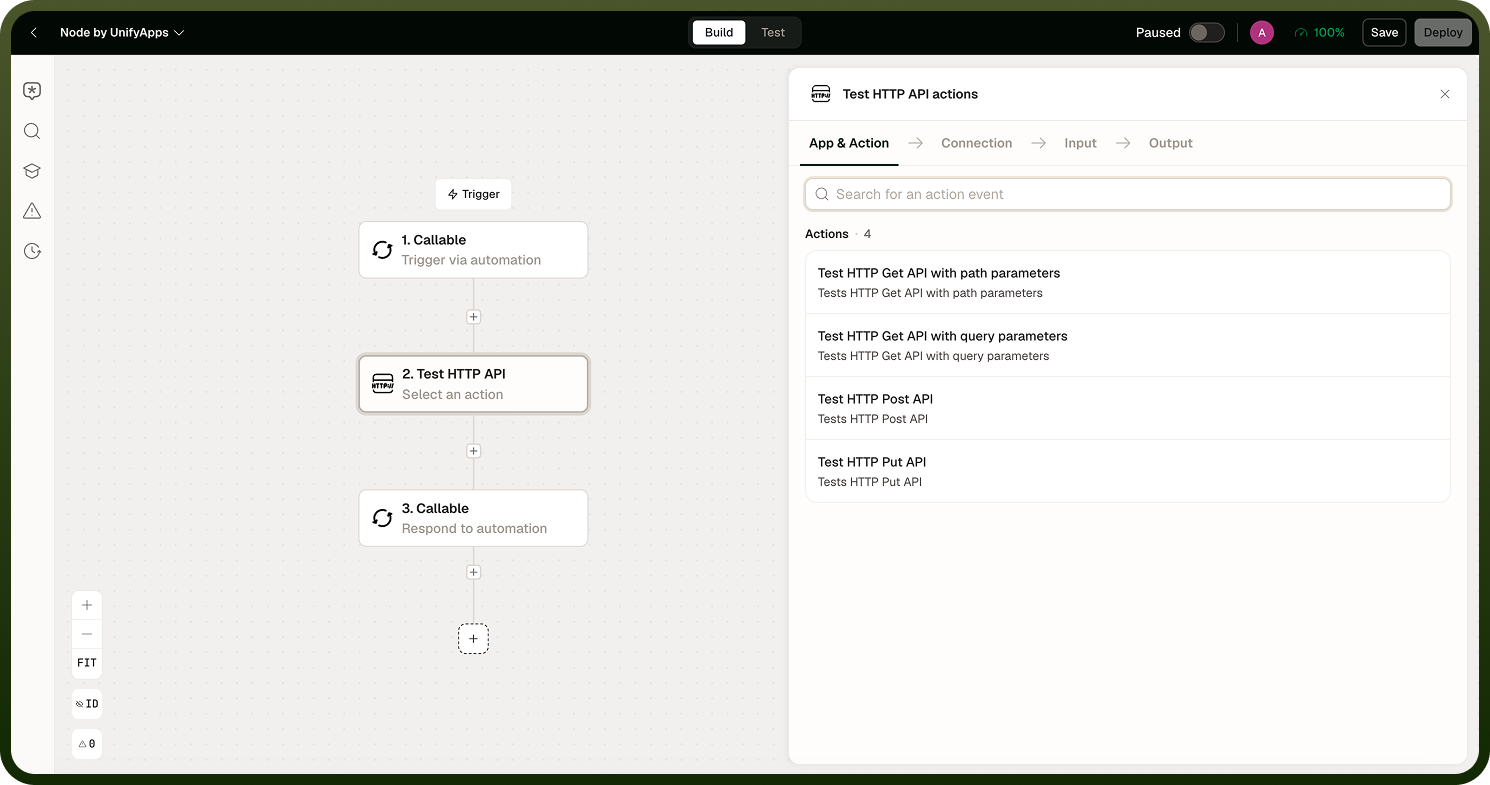
Test HTTP API is not a way to call your real services. It simulates HTTP endpoints that return controlled, predictable responses. Use it to:
Build and test the logic for mapping path parameters, query parameters, and request bodies
Exercise downstream steps with a success response before connecting to a live API
Test error-handling branches by triggering a forced-failure response from the node
Note: To call an actual external service, use the Custom HTTP node instead. Test HTTP API is for development and debugging only.
Operations
Test HTTP API exposes the following sample operations:
GET with path parameters — simulate a REST GET that reads from a URL path segment
GET with query parameters — simulate a REST GET with URL query string values
POST — simulate a POST with a request body
PUT — simulate a PUT with a request body
Each operation returns predictable test data, including a forced-failure option that returns an error response so you can verify your error-handling branches work correctly.
Notes
Keep the following in mind when using the Test HTTP API node:
Once your HTTP logic is verified with Test HTTP API, replace the node with a Custom HTTP node pointed at the real endpoint.
Test HTTP API requires no connection — it runs against a built-in test server with no authentication needed.
The responses are fixed sample data; they do not reflect any real data in your systems.
Once your HTTP logic is verified with Test HTTP API, swap the node for a Custom HTTP node pointed at the real endpoint to complete your automation.