


The Ontology node provides three distinct rule stages for managing incoming records: Matching identifies duplicates by comparing records against existing golden records, Survivorship merges matched records field by field using a strategy you configure, and Data Quality quarantines records that fail validation. Understanding how these stages interact is essential for building a reliable master data pipeline.
Overview
Matching, survivorship, and data quality do different jobs and must be configured separately. Matching alone only finds duplicates — it does not merge them. Survivorship is what causes merging to happen, and it is off by default. Data quality runs independently to keep invalid records out of the golden record store. Configuring all three intentionally is what produces clean, trustworthy golden records.
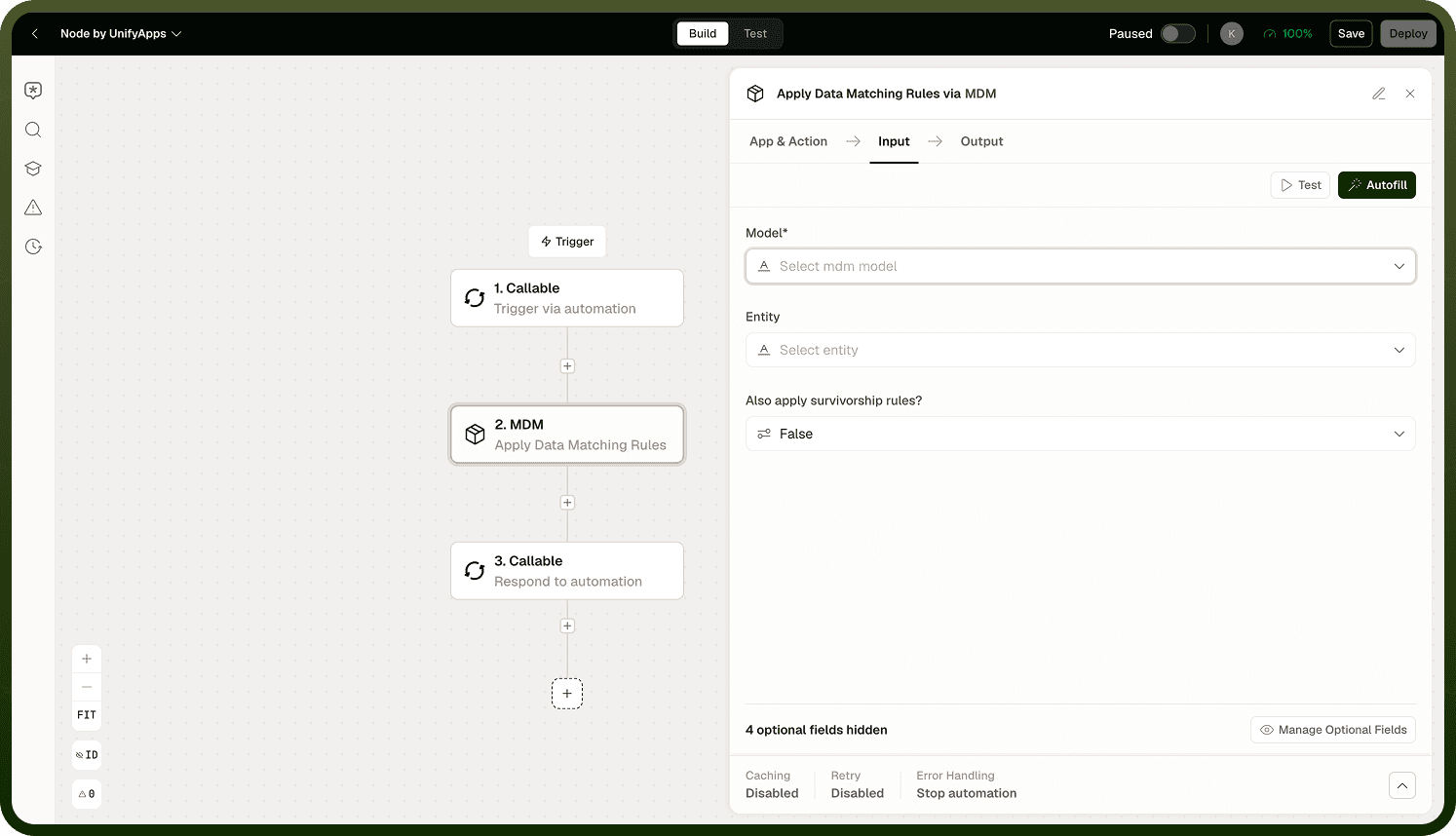
Matching
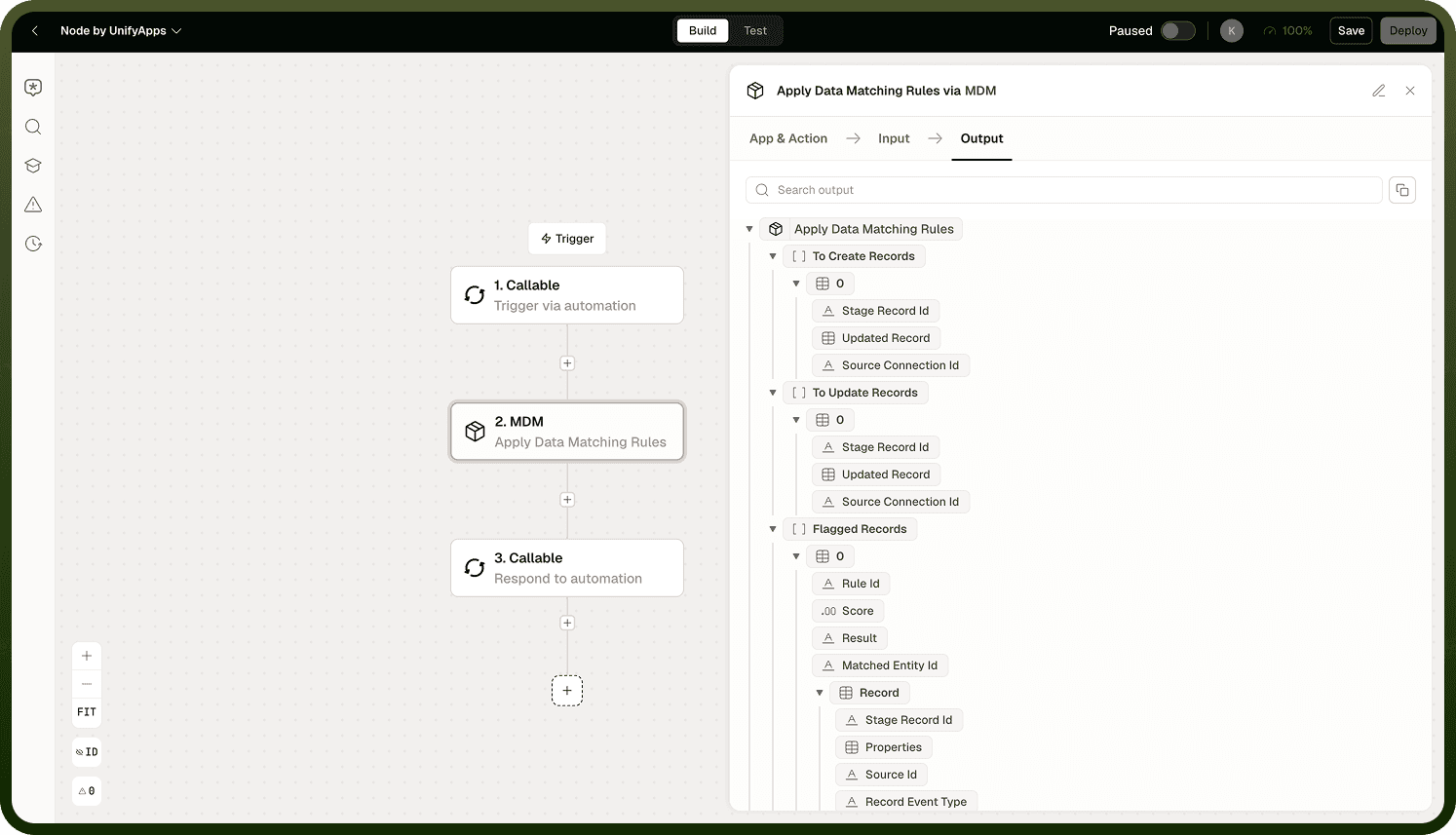
Matching compares an incoming record against existing golden records and sorts it into one of three outcomes:
Create — no match found; the record becomes a new golden record.
Update — a match is found; the record is associated with the existing golden record.
Flagged — a match is found with a confidence score, but not a definitive match; the record is held for review.
By itself, matching only finds duplicates — it does not merge records. The matching step identifies what to do but does not act on that classification without survivorship enabled.
Survivorship
Survivorship decides which field values win when matched records are merged. It is optional and off by default — you must explicitly turn it on in the matching step.
When survivorship is enabled, you configure a strategy for each field that determines which value is kept:
Strategy | What it does |
|---|---|
Most recent | Uses the value from the most recently updated source record |
Most frequent | Uses the value that appears most often across matched records |
Source priority | Uses the value from the highest-priority source system you designate |
Minimum | Uses the lowest value across matched records |
Maximum | Uses the highest value across matched records |
Designated winner | Always uses the value from a specified source |
Survivorship configuration panel showing per-field strategy options (most recent, source priority, etc.)
Survivorship is off by default: Without it enabled, matching classifies incoming records as create, update, or flagged — but no field-level merging occurs. Enable survivorship explicitly and configure a strategy per field to get automatic merging.
Data-Quality Rules
Data-quality rules validate records and quarantine those that fail. Records that pass quality rules continue through the pipeline; records that fail are held out of the golden record store.
Quality rules run after matching. This means a record may be matched and classified as an update, but still quarantined by a quality rule before it joins the golden record store. Quarantine and the "flagged" matching outcome are separate: a flagged record hit a confidence threshold in matching; a quarantined record failed a quality rule.
Notes
Matching, survivorship, and data quality are three separate mechanisms — configure each intentionally before ingesting source data at scale.
Matching identifies duplicates; survivorship merges them; data quality validates them. All three must be configured independently.
Survivorship is off by default — enable it explicitly in the matching step if automatic field-level merging is required.
Configure survivorship strategies field by field; different fields may need different strategies (e.g., source-priority for an account name, most-recent for a last-contact date).
The "flagged" matching outcome means a record hit a confidence threshold and needs review — it is not the same as quarantine.
Quarantined records failed a quality rule and are held out of the golden record store until corrected and reprocessed.
Design your matching and survivorship configuration before ingesting source data at scale; changing strategies after records are merged requires reprocessing.