


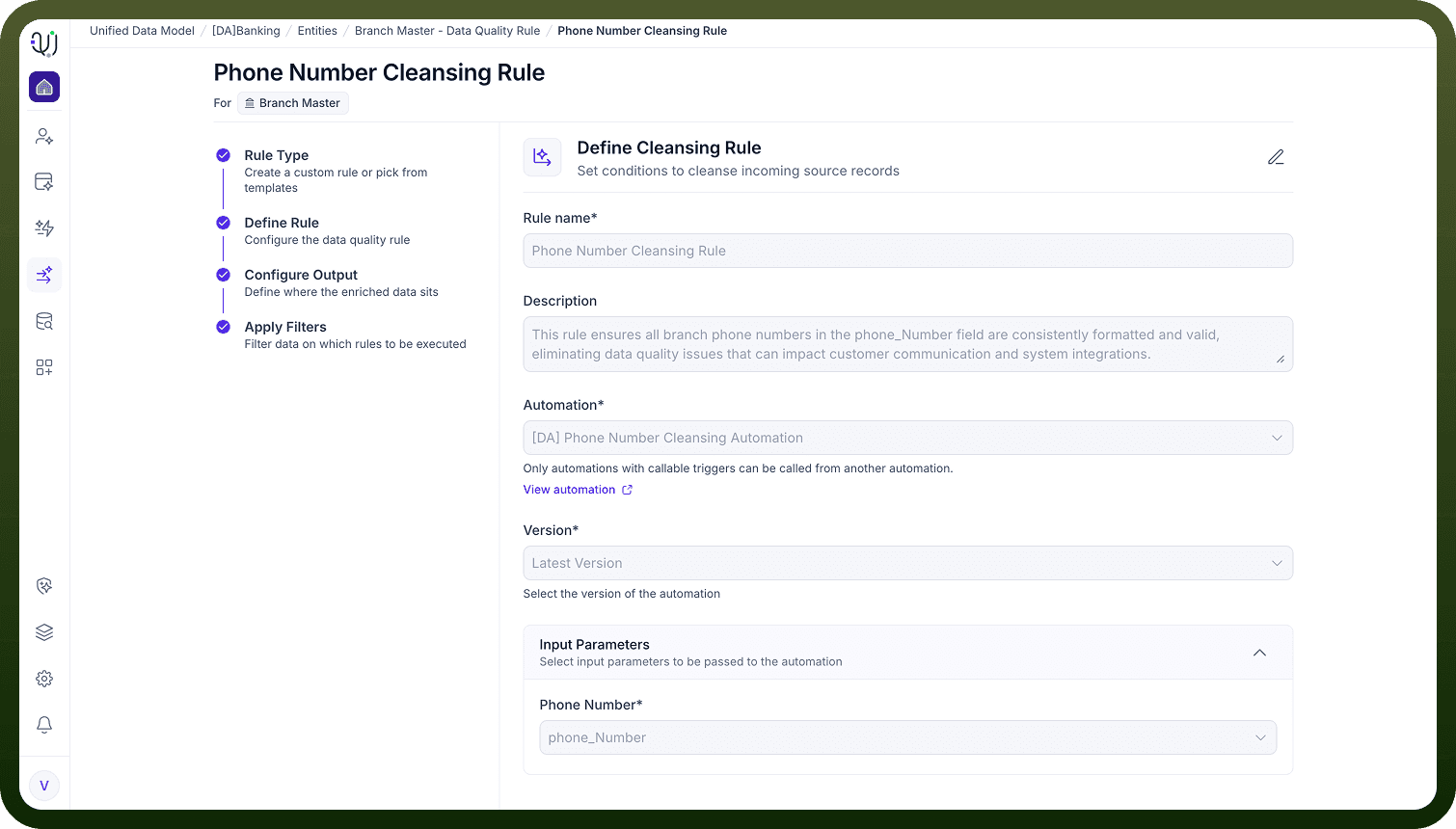
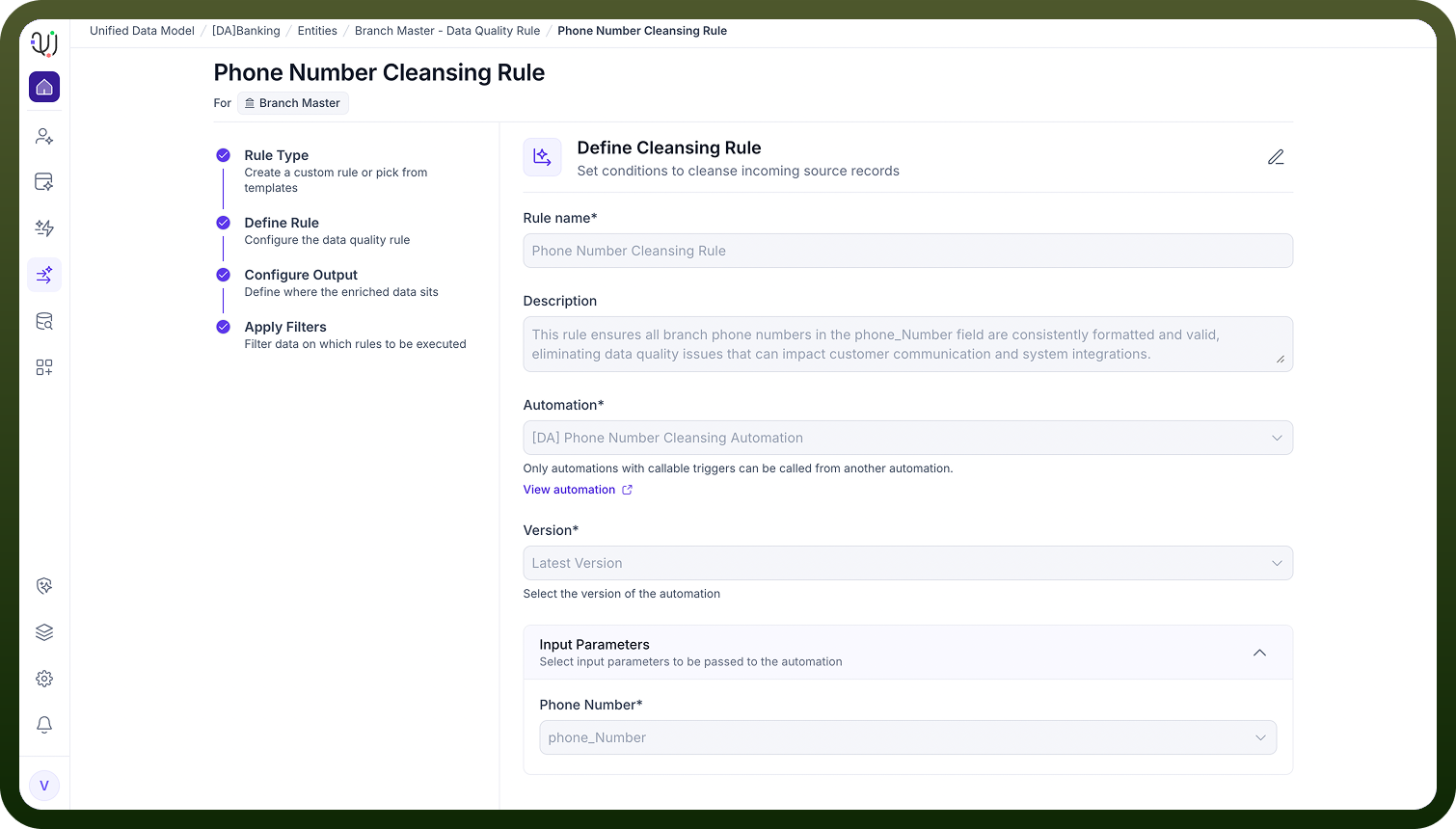
Definition
Cleansing Rules (also known as Data Cleaning or Data Scrubbing) define how to identify, correct, and standardize inconsistent or erroneous data. These rules transform messy or incomplete records into clean, reliable, and analysis-ready datasets.
Purpose of Cleansing
Cleansing Rules help achieve:
Duplicate Removal – Identify and eliminate redundant records
Error Correction – Fix typos, invalid characters, and formatting issues
Standardization – Apply consistent formats (dates, phone numbers, codes, casing, etc.)
Missing Data Handling – Apply strategies for null or incomplete values
Cross-Field Consistency Checks
Normalization – Convert values into standard forms
Outlier Handling – Detect and clean anomalous or extreme data points
Usability Improvements – Ensure data is consistent and ready for downstream operations
Cleansing Rule Types in UnifyApps
UnifyApps supports multiple cleansing rule categories, such as:
Deduplication
Standardization
Data Type Correction
Null Handling
Whitespace & Character Cleanup
Outlier Detection
Implementation Method
Automation-Based Cleansing (iPaaS Layer)
All cleansing logic in UnifyApps is implemented through automation workflows in the iPaaS layer. This allows cleansing to be defined as a structured, multi-step sequence that supports:
Conditional logic
Pattern cleaning and normalization
Merging or updating corrected records
Integrating external services for advanced validation
Real-time or scheduled execution
Example Workflow
A cleansing workflow might:
Trigger when a new or updated record enters the system.
Apply a Character Cleanup rule (e.g., stripping non-numeric characters from a phone number).
Apply a Standardization rule to convert the value into a required format (e.g., E.164).
Map the output to the corresponding entity field..
This ensures that only corrected, standardized data moves forward in the system.