


Modify API responses before they reach the client by adding, removing, renaming, or replacing headers and body fields.
Overview
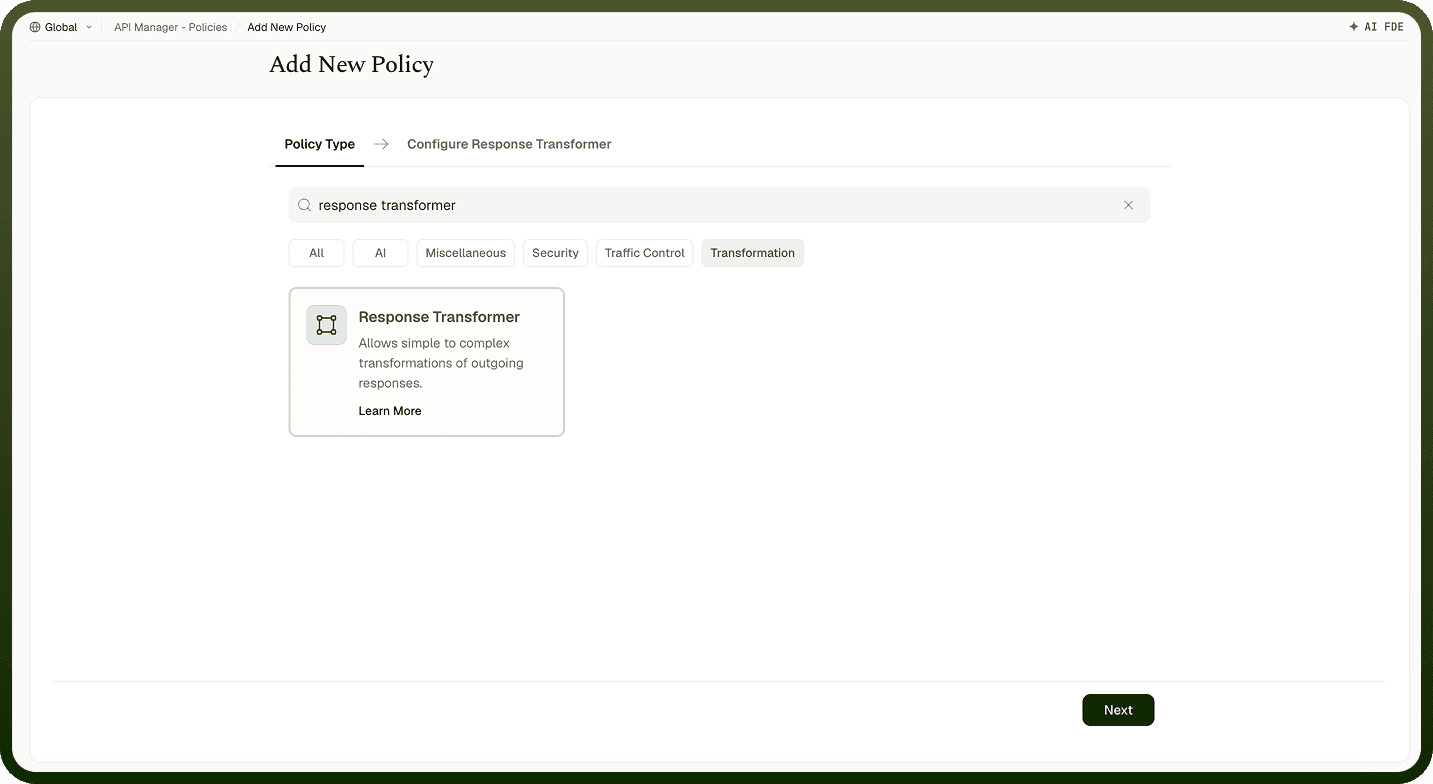
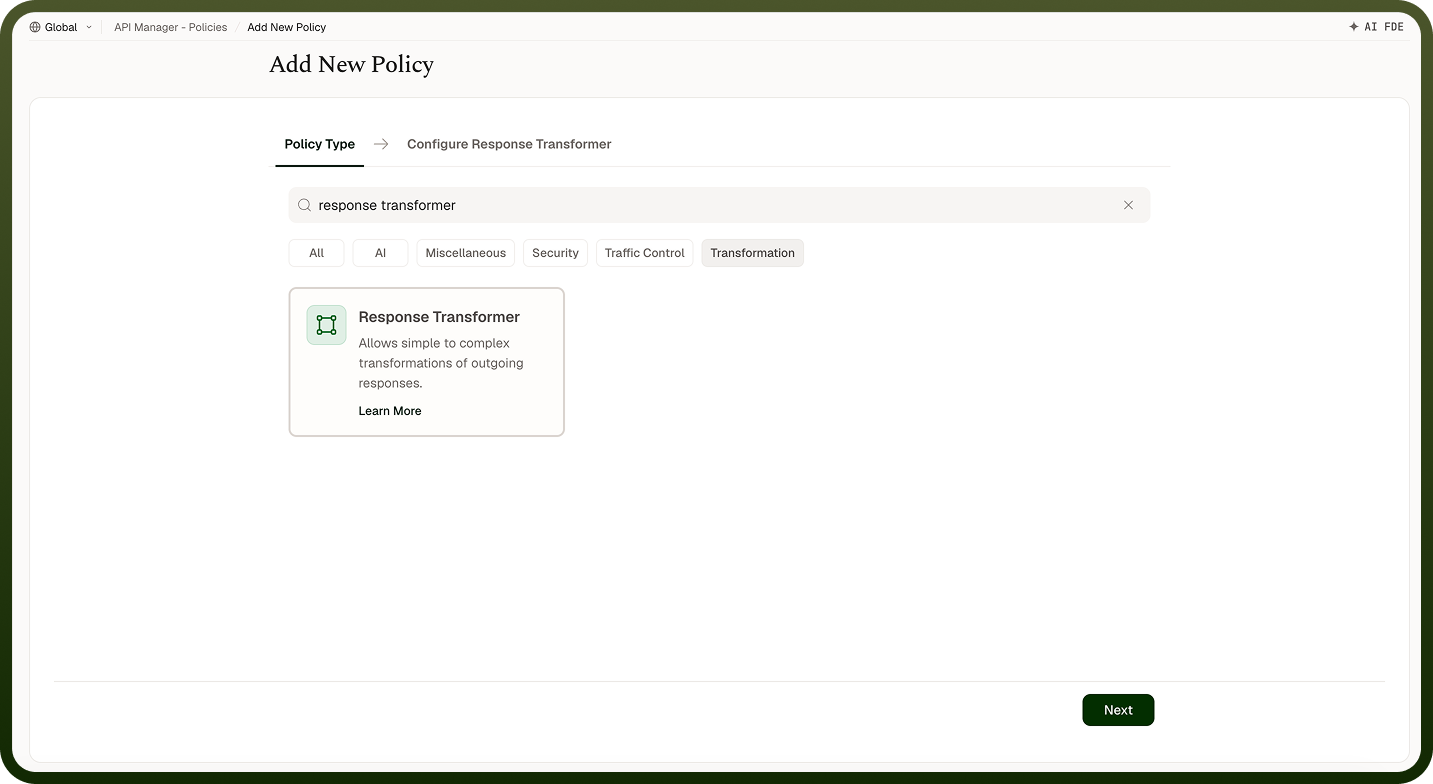
A Response Transformer is an outbound policy that reshapes successful (200) API responses before they are returned to the client.
How it works
Response received from backend — The backend service returns a response to the gateway.
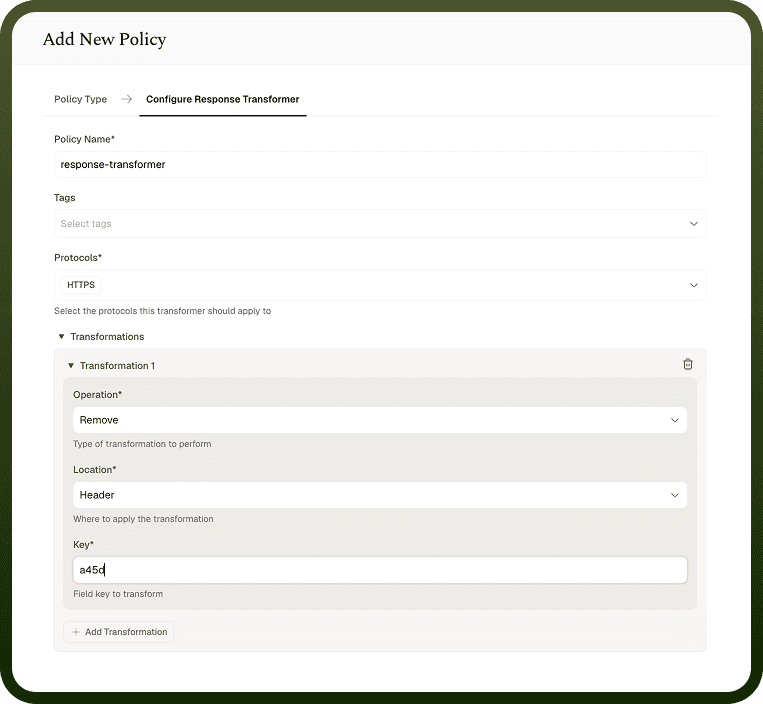
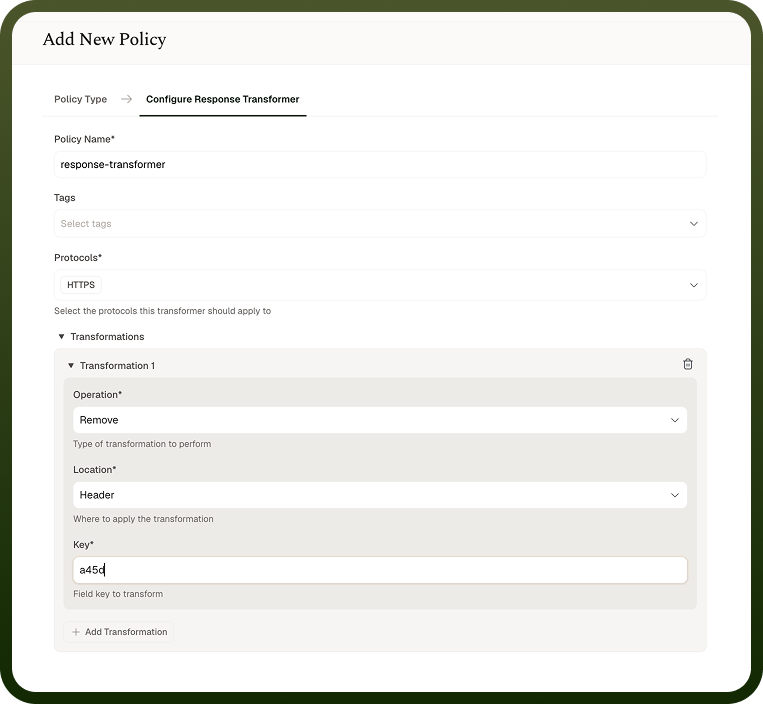
Policy evaluation — The policy applies only to successful (200) responses that match the configured protocols. Error responses are returned unchanged.
Transformation execution — Each rule is applied in sequence: headers or body fields are added, updated, renamed, replaced, or removed per the configured location.
Modified response returned — After all transformations, the updated response is sent to the client.
Attaching the policy
Policies can be attached to an access profile, an API, or an API group. They are applied in that order: access profile, then API, then API group.
Notes
Transformation rules are applied in the order you define them — if rules depend on each other (e.g., rename before replace), order them deliberately.
Use Remove to strip internal or sensitive fields (internal IDs, debug headers) before the response reaches clients.
Use Upsert to inject standard headers (e.g., X-API-Version) across all responses without changing every backend endpoint.
Test transformations against sample responses before attaching the policy to an API group, to confirm the output shape is what clients expect.