Unify Logo Footer.svg
Platform Tools
Logo
Template editor

Template editor

Logo

3 mins READ

The full-page screen where you write a template's content and define its variables.

Overview

The editor — Setup your new template for a new one — has the content form on the left and the Template Variables panel on the right. The form asks for:

  • Name your template — required (placeholder: "Email Marketing Campaign").

  • Workspace — where the template lives.

  • Tags — pick existing tags or create new ones.

  • Type — EmailWhatsAppSMS, or Prompt (radio; defaults to Email).

  • Editor — the content itself (required).

Click Create (new) or Save (editing, if you have edit permission) in the header. Without edit permission the form is read-only.

Where: Templates › New Template / edit
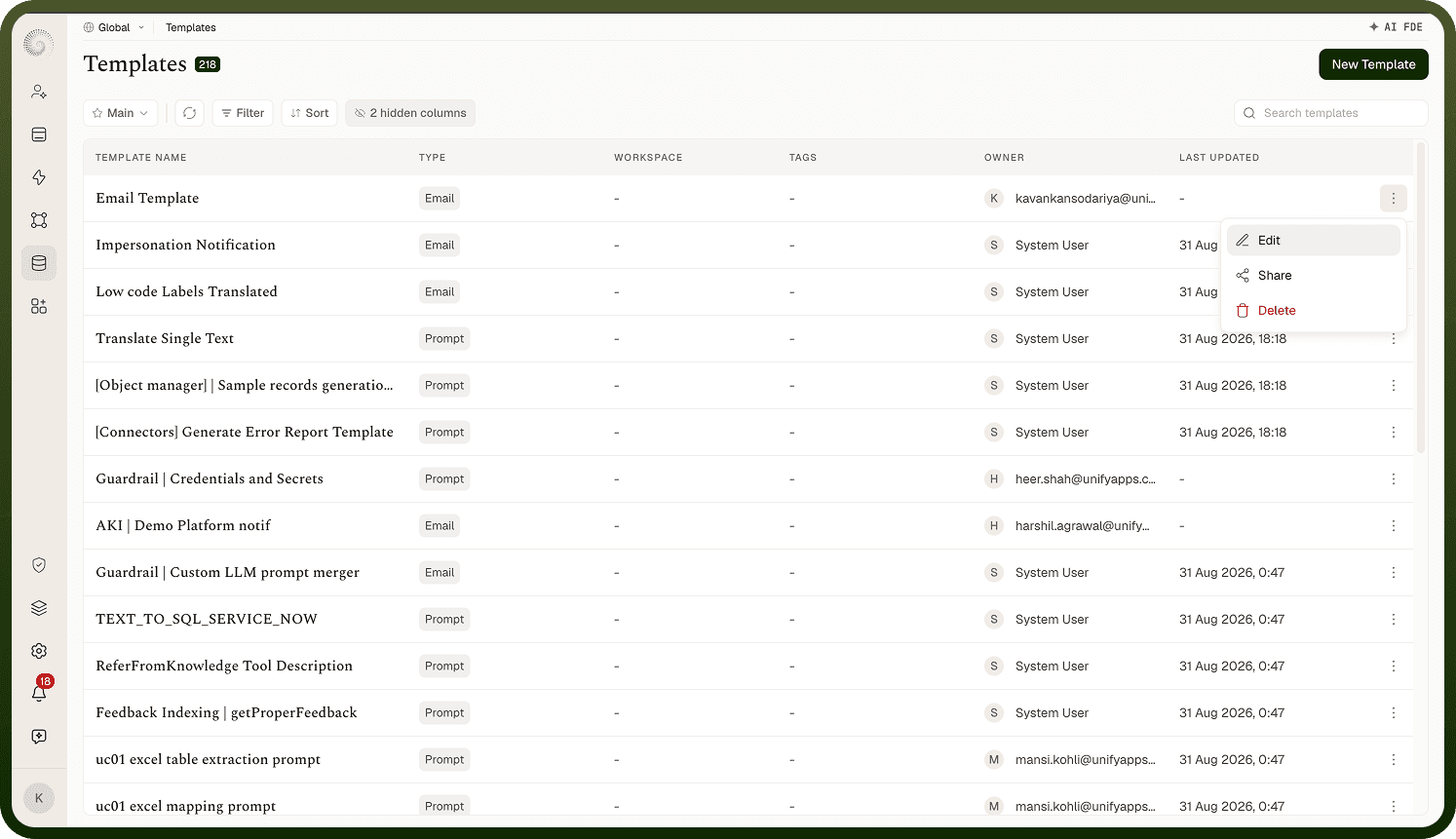
Edit template.png
Edit template.png

Defining template variables

The right-hand Template Variables panel ("Define variables that you wish to use in the template") is a field list. Each variable has:

  • Key — starts with a letter; no spaces; no special characters except "_".

  • Display LabelHelp TextDefault value, and an optional flag.

  • Field Type — StringNumberIntegerBooleanDate, or Date Time.

  • Nest under — to group a field inside an Object field.

These variables become the template's input contract: they're what a campaign, automation Compile template step, or the Test Template dialog asks you to fill.

Where: Template editor › Template Variables

FAQs

How does the content editor change with the Type?

  • Email — a rich block editor: compose a formatted email body (headings, images, layout blocks).

  • WhatsApp / SMS / Prompt — a plain text editor.

In both, type your defined variables as mentions inside the content; at compile time each placeholder is replaced with the supplied value. Placeholders follow the platform's Jinja-style syntax ({{ variable }}).

Where: Template editor, Editor

Define variables before writing content?

The variable mention picker in the content editor offers only variables that already exist in the Template Variables panel. Add the variables first, then write the content referencing them — otherwise you'll be retro-fitting placeholders.

Where: Template editor, workflow tip

How is the template rendered at runtime?

The content is compiled by the platform's templating engine: every placeholder is replaced with the value supplied for the matching variable key. In automations, use the Compile template step to render a template with mapped values and pass the result to any downstream step (send email, send SMS, post message, prompt an AI model).

Where: Automation builder › Compile template